In the high-stakes environment of commercial polymer manufacturing, the margin for error is non-existent. When you run a continuous extrusion line, selecting the wrong raw material does not just result in a single defective part—it generates thousands of meters of unsalable scrap, destroys expensive die heads through thermal degradation, and cripples your operational profitability. Many plant managers attempt to cut costs by substituting resins without understanding the rheological and thermal implications. This is a catastrophic engineering failure.

From our experience engineering advanced manufacturing equipment at Xjgmachine, successful profile, pipe, and sheet production relies entirely on matching the mechanical properties of the thermoplastic to the precise torque and shear characteristics of the machine. You cannot brute-force polymer physics. When determining which of the types of plastic is best for extrusion, you must evaluate melt flow index, thermal stability, and end-use mechanical requirements. In this comprehensive technical guide, we break down the definitive five plastics that dominate the global extrusion market, explaining exactly how to process them and whether they are the correct choice for your specific commercial application.
When evaluating which of the 5 types of plastic is best for extrusion, industrial manufacturers rely on: 1. PVC (Polyvinyl Chloride) for rigid pipes and construction profiles; 2. HDPE (High-Density Polyethylene) for heavy-duty municipal water and gas infrastructure; 3. PP (Polypropylene) for high-temperature fluid transport; 4. PA66 (Polyamide/Nylon) for structural thermal break strips in aluminum fenestration; and 5. ABS (Acrylonitrile Butadiene Styrene) for complex, high-gloss consumer profiles. Selecting the right polymer requires matching it to the correct extruder architecture—twin-screw for heat-sensitive PVC, and high L/D ratio single-screw for polyolefins.
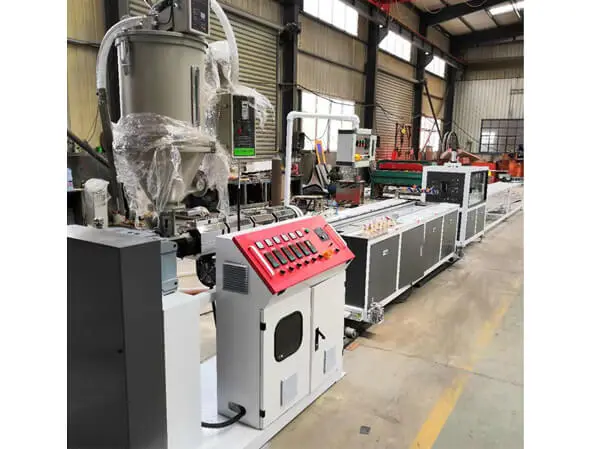
Plastic extrusion is a continuous, high-volume manufacturing process where solid thermoplastic resin (in the form of pellets, granules, or powder) is fed into a heated barrel. A heavy-duty rotating screw shears and melts the plastic, generating significant internal friction. This homogeneous melt is then forced under immense pressure through a precision-machined steel die, which dictates the cross-sectional profile of the final product. Upon exiting the die, the hot profile passes through a vacuum sizing and water cooling tank to freeze its dimensions before being cut to length.
In most professional situations, the success of an extrusion run is dictated by the polymer's "melt strength." Unlike injection molding, where molten plastic is contained within a closed steel cavity, extruded plastic exits the die into open air. If the plastic has low melt strength, it will droop, sag, and lose its dimensional tolerances before the cooling bath can solidify it. This is why highly crystalline materials or those with incredibly high melt flow indices (MFI) are often terrible candidates for continuous profile extrusion. You need polymers that possess a wide processing window and hold their shape during the transition from melt to solid.
PVC is the undisputed king of the construction industry. Available in rigid (UPVC) and flexible (CPVC/Plasticized) formulations, it offers exceptional chemical resistance, flame retardancy, and structural rigidity. However, PVC is notoriously heat-sensitive. If subjected to high shear or prolonged residence time in the barrel, it will degrade, releasing corrosive hydrochloric acid gas. Therefore, you absolutely must process PVC powder using a SJSZ Conical Twin Screw Extruder, which provides the necessary positive displacement and low-shear mixing to prevent burning. PVC is the foundation of any commercial PVC Pipe Production Line.
For heavy-duty applications like municipal water mains, sewer lines, and underground gas distribution, HDPE is the premier choice. It boasts exceptional impact strength, flexibility (preventing rupture during ground shifts), and superb environmental stress crack resistance (ESCR). Because HDPE relies heavily on mechanical shear to melt efficiently, it is processed using a single screw extruder with a high Length-to-Diameter (L/D) ratio. A dedicated HDPE Pipe Production Line utilizes spiral die heads to eliminate weld lines in the pipe wall.
While HDPE is excellent for cold water and underground applications, it fails under high heat and pressure. Polypropylene—specifically PPR (Polypropylene Random Copolymer)—is engineered for continuous hot water plumbing systems in residential and commercial buildings. PP offers low density, high rigidity, and excellent fatigue resistance. Operating a PPR Pipe Production Line requires precise temperature control in the vacuum calibration tank to prevent internal residual stress from warping the pipe after cutting.
In the architectural fenestration sector, aluminum windows transfer extreme heat and cold unless interrupted by a thermal barrier. Polyamide 66, reinforced with 25% glass fiber (PA66 GF25), is the only plastic trusted for this application because its coefficient of thermal expansion exactly matches that of aluminum. Processing this engineering plastic requires specialized machinery, specifically a PA66 GF25 Polyamide Profile Thermal Break Strip Extrusion Line. Note: PA66 is highly hygroscopic; it must be aggressively dried prior to extrusion to prevent surface blistering.
When visual aesthetics, high gloss, and impact resistance are paramount, ABS is the material of choice. Common in consumer goods, edge banding, and automotive trims, ABS is an amorphous polymer. This means it lacks a sharp melting point, giving operators a wide and forgiving processing window. It holds intricate die shapes exceptionally well, though it requires robust motor torque due to its high melt viscosity.
Standardizing your production around these five core plastics allows you to dial in your equipment with absolute precision. You reduce downtime spent purging incompatible resins and streamline your raw material procurement. For commercial users running a Plastic Extruder 24/7, predictability equals profitability. By mastering these specific polymers, you can guarantee dimensional stability and mechanical performance to your end clients.
We apply practical commercial judgment here: no single plastic does everything. The limitation of PVC is its weight and brittleness at freezing temperatures. The limitation of HDPE is its inability to handle continuous pressurized hot water. The limitation of PA66 is its aggressive moisture absorption, which demands expensive dehumidifying dryers on your factory floor. You must select the plastic that specifically aligns with the environmental demands of the final product.
For commercial users and infrastructure manufacturers: If you are manufacturing building materials, agricultural irrigation systems, or automotive weather seals, mastering these five plastics is mandatory. You must invest in dedicated machinery, such as a specialized SJ Single Screw Extruder for polyolefins or a twin-screw for PVC.
Who does not need it: If you require complex, discrete 3D geometries (like a threaded bottle cap or a gear), extrusion is the wrong manufacturing method entirely. You need injection molding. Extrusion is strictly for continuous linear profiles.
The most catastrophic mistake operators make is attempting to process unplasticized PVC (UPVC) powder through a standard single screw extruder. Single screws rely on massive friction to melt the plastic. Because PVC is thermally unstable, this friction will burn the PVC into a black, acidic mass, permanently damaging the screw and barrel. You must use a conical or parallel twin screw for PVC powder.
Another profound error is inadequate cooling. When extruding thick-walled HDPE or PP pipes, the outside of the pipe cools immediately in the water bath, while the inside remains molten. This differential cooling causes the pipe wall to shrink and warp internally. A properly designed vacuum calibration and multi-stage spray cooling tank is just as critical as the extruder itself.
When investing in extrusion lines, match the machine's architecture to the resin. Look at the motor torque, the gearbox rating, and the L/D ratio of the screw. A 25:1 L/D ratio might be sufficient for basic profiles, but heavy-duty HDPE pipe requires a 33:1 or 38:1 L/D ratio to ensure complete homogenization of the melt.
| Plastic Type | Key Characteristic | Primary Extrusion Application |
|---|---|---|
| PVC | High rigidity, flame retardant | Sewer pipes, window profiles, siding |
| HDPE | High impact, flexible, ESCR | Municipal water mains, gas pipes |
| PP (PPR) | High thermal tolerance, fatigue resistant | Indoor hot water plumbing, warm edge spacers |
| PA66 (GF25) | Thermal expansion matches aluminum | Thermal break strips for window frames |
| ABS | High gloss, excellent surface finish | Edge banding, decorative automotive trims |
| Material State | Required Extruder Type | Why This Machine? |
|---|---|---|
| PVC Powder | Conical Twin Screw Extruder | Provides low-shear, positive displacement to prevent thermal degradation and burning. |
| HDPE / PP Pellets | Single Screw Extruder (High L/D) | Generates high mechanical shear necessary to thoroughly melt and homogenize polyolefins. |
| PA66 / ABS Pellets | Single Screw Extruder | Requires robust torque and venting capabilities to manage moisture and high viscosity. |
| The Pros (Advantages) | The Cons (Disadvantages) |
|---|---|
| Extremely high production volumes and low cost per meter. | Limited strictly to 2D continuous cross-sectional shapes. |
| Ability to co-extrude multiple materials (e.g., hard and soft PVC). | High initial capital expenditure for the machine, die, and downstream calibration. |
| Excellent structural consistency and smooth surface finishes. | Requires highly skilled operators to balance temperature, pressure, and haul-off speed. |
In most professional situations, pushing generic resins through generic machines will bankrupt your operation via high scrap rates. You must deploy purpose-built equipment engineered for the specific rheology of your target plastic. At Xjgmachine, we do not just sell iron; we engineer complete, turnkey production environments.
For manufacturers looking to dominate the energy-efficient building sector, we highly recommend analyzing how different resins can be combined to solve complex thermal problems. A prime example is our advanced spacer bar technology.
The energy-saving effect of the warm edge bar is vastly superior to the traditional aluminum strip. Traditional aluminum is a "cold edge" method due to its rapid heat conduction and severe energy loss. Any spacing bar with a thermal conductivity lower than aluminum qualifies as a warm edge bar.
Our dedicated PE/PP/PVC Warm Edge Spacer Bar Extrusion Line allows you to process these highly insulating polymers efficiently. Whether you are producing rigid stainless steel composite warm edge bars or flexible window edge rubber strips, this line provides the precise thermal control and haul-off stability required for flawless architectural components.
To ensure your manufacturing processes align with global engineering standards, we strongly advise consulting the following organizations regarding polymer selection and processing safety:
ASTM International - Provides the definitive material testing standards for the mechanical and thermal properties of extruded thermoplastics, including PVC, PE, and PP pipe specifications.
International Organization for Standardization (ISO) - Sets global benchmarks for plastic piping systems, environmental stress cracking, and dimensional tolerances.
Society of Plastics Engineers (SPE) - The premier technical society offering peer-reviewed literature and best practices on extrusion rheology, screw design, and polymer degradation prevention.


 English
 العربية
 русский
 Español
 français
 português
 Deutsch
 italiano
 Türkçe
 한국어
한국어 日本語
日本語