English
 العربية
 русский
 Español
 français
 português
 Deutsch
 italiano
 Türkçe
 한국어
 日本語

Every commercial 3D print farm, rapid prototyping laboratory, and serious hobbyist eventually faces the same operational crisis: mounting bins of plastic waste. Failed prints, discarded support structures, rafts, and purge lines accumulate at a staggering rate. In the industrial manufacturing sector, discarding high-grade thermoplastic polymers is not just an environmental failure; it is a massive leak in your operational budget. However, turning a solid, failed PLA or ABS print back into a spooled, printable filament with a tolerance of 1.75mm plus or minus 0.05mm is a complex thermodynamic and mechanical challenge. You cannot simply melt plastic in a tube and expect precision results. You need hardware that can crush, heat, extrude, pull, and spool with absolute consistency. If you are investigating the best 3d printer filament recycling machines, you must separate the under-engineered desktop toys from the heavy-duty industrial systems capable of processing dense polymers without jamming.
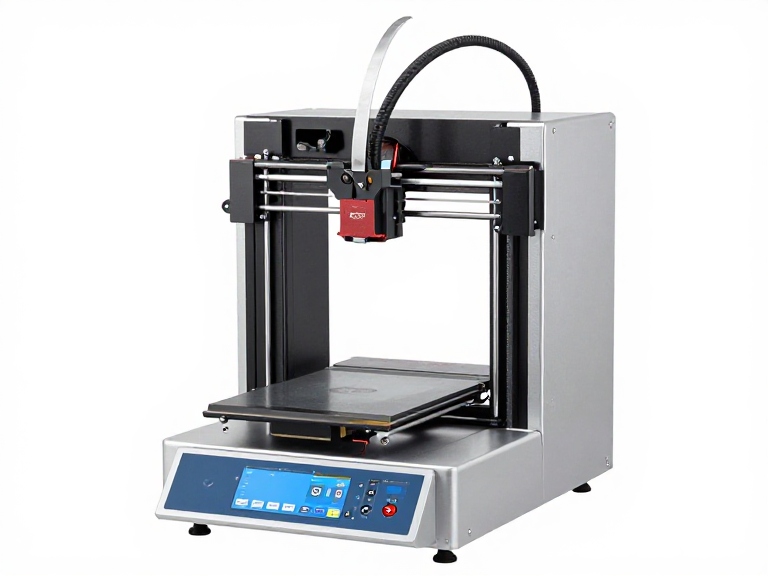
From our experience engineering industrial plastic recycling lines at Xjgmachine, we know that successful filament extrusion relies heavily on the quality of your pre-processing. A high-end desktop extruder is entirely useless if you cannot properly shred large 3D prints into uniform granules first. In this guide, we evaluate the best 3d printer filament recycling machines on the market, bridging the gap between desktop extrusion units and the heavy-duty industrial crushers and pelletizers required to feed them, ensuring you make a buying decision grounded in commercial reality.
Quick Answer: The Best 3D Printer Filament Recycling Machines
The best 3d printer filament recycling machines depend on your operational scale. For commercial print farms and industrial applications, a desktop all-in-one unit will bottleneck your production. You must pair a high-end prosumer extruder like the 3devo Precision Series or Filabot EX6 with industrial-grade pre-processing hardware like the Xjgmachine Plastic Crusher to achieve viable throughput. For hobbyists, the Felfil Evo offers a great entry point. True recycling success requires uniform granulation, strict moisture control, and precise extrusion pull-rates to maintain strict 1.75mm diameter tolerances. Attempting to recycle filament without a heavy-duty shredder to break down large failed prints is the most common point of failure for commercial users.
What It Is: The Anatomy of Filament Recycling
Filament recycling is the mechanical and thermal process of reclaiming waste thermoplastic from 3D printing (primarily PLA, PETG, ABS, and TPU) and converting it back into a usable, dimensionally accurate filament spool. Unlike injection molding, where slight viscosity changes are forgivable, Fused Deposition Modeling (FDM) 3D printing demands absolute precision. If your recycled filament varies in diameter by more than 0.05mm, it will jam the PTFE tube of your hotend or cause severe under-extrusion.
The best 3d printer filament recycling machines are essentially miniature versions of the massive industrial compounding lines we build at Xjgmachine. They consist of a heated barrel, a specialized extrusion screw (auger) to melt and mix the polymer, a precision nozzle, a cooling path (air or water bath), a diameter measurement sensor, and a spooling tractor (puller). However, these machines only represent the final stage of the process.
How It Works: The Five Stages of Polymer Recovery
In most professional situations, filament recycling is not a single-step operation. It requires a strict five-stage workflow:
Size Reduction (Crushing/Shredding): You cannot feed a failed helmet print into a desktop extruder. The plastic must be ground down into uniform flakes or pellets (typically 3mm to 5mm in size). This requires heavy torque. We recommend deploying an industrial Plastic Crusher to achieve uniform particle size without generating excessive dust.
Dehumidification (Drying): Polymers like PLA and PETG are highly hygroscopic. If you extrude wet plastic, the water boils inside the barrel, causing hydrolysis (breaking the polymer chains) and leaving bubbles in the filament. Regrind must be dried in a desiccant hopper prior to extrusion.
Melt Extrusion: The dry granules enter the hopper of the filament maker. A motorized auger pushes the plastic through multiple heating zones, melting it and generating the pressure needed to force it through a precision die (usually 1.5mm to 1.7mm, as the plastic expands slightly upon exiting, known as die swell).
Cooling and Measurement: The molten plastic must be cooled rapidly—usually via directed fans or a water bath—before it deforms. In-line optical sensors measure the diameter hundreds of times per second.
Pulling and Spooling: A mechanical puller adjusts its speed dynamically based on the sensor data. If the filament is too thick, it pulls faster to stretch it; if too thin, it slows down. The final product is neatly wound onto a spool.
The 6 Best 3D Printer Filament Recycling Machines
1. 3devo Precision Series (Best for Lab-Grade and Prosumer Use)
When searching for the best 3d printer filament recycling machines for laboratory and high-end prosumer applications, 3devo is the benchmark. Built in the Netherlands, the Precision Series operates vertically, which saves desk space and uses gravity to assist the extrusion process. It features an advanced high-flow extruder screw, four independently controlled heating zones, and a highly accurate optical sensor loop that adjusts the puller speed dynamically. It excels at handling high-temperature engineering polymers like PEEK and Ultem. However, its internal hopper capacity is small, meaning it relies heavily on extremely uniform, professionally crushed regrind to prevent feed bridging.
2. Filabot EX6 (Best for High-Volume Print Farms)
The Filabot EX6 is designed for commercial print farms that generate pounds of waste weekly. It is a robust, horizontal extrusion system capable of processing up to 2.2 pounds of plastic per hour. The EX6 features a multi-zone heating barrel and a specialized mixing screw that ensures excellent melt consistency, even when blending virgin pellets with recycled regrind. To operate the EX6 successfully, you must pair it with a heavy-duty cooling bath and spooler. Furthermore, because of its high throughput, feeding it manually chopped prints is unfeasible; a dedicated shredding solution is mandatory.
3. Xjgmachine Plastic Crusher & Pelletizing System (Best for Commercial Pre-Processing)
We must interject with practical industrial reality: the biggest bottleneck in 3D filament recycling is not the extruder; it is the shredding phase. Desktop shredders stall, overheat, and produce jagged shards that jam extruder hoppers. For print farms, universities, and commercial prototyping labs generating substantial waste, the true solution is integrating industrial hardware. We recommend using a heavy-duty Single Shaft Shredder or a dedicated Plastic Crusher to break down massive PLA and ABS chunks. If your operation scales to hundreds of kilograms, processing that regrind through a compact PE PP Pelletizing/Granulating Line ensures you create perfectly uniform pellets. Uniform pellets are the absolute secret to achieving tight diameter tolerances in your final 3D filament. Without industrial pre-processing, your expensive desktop extruder is destined to fail.
4. Felfil Evo (Best for Hobbyists and Beginners)
For the home hobbyist looking for the best 3d printer filament recycling machines on a budget, the Felfil Evo is an open-source inspired, compact horizontal extruder. It is ideal for users who want to experiment with custom color mixing or recycling small batches of PLA. While it lacks the multi-zone heating and advanced automated spooling of the 3devo, it is an excellent educational tool. In our testing, the flow rate is slow, and diameter consistency relies heavily on the user manually tuning the external cooling fans and spooler tension, making it unsuitable for commercial production but perfect for garage tinkering.
5. Artme 3D Desktop Extruder (Best DIY / Open-Source Kit)
The Artme 3D system represents the maker ethos. It is heavily based on open-source hardware designs, allowing users to 3D print many of the non-heated structural components themselves. It utilizes standard 3D printer stepper motors, PID temperature controllers, and auger bits. It is one of the most affordable pathways into filament recycling. However, for commercial users, the labor required to build, calibrate, and constantly babysit this machine negates any cost savings. It is strictly a project machine for engineering enthusiasts.
6. Wellzoom Desktop Extruder (Best for Small-Scale Educational Use)
Wellzoom offers a line of turnkey, budget-friendly desktop extruders frequently found in STEM classrooms and small studios. It operates horizontally and typically comes as a matched set with a basic water cooling bath and a spooling tractor. While it is a step above pure DIY kits, it struggles with the thermal degradation inherent in recycling PLA multiple times without the addition of virgin pellets. It is an adequate choice for educational demonstrations, but its diameter tolerance fluctuations (often +/- 0.1mm) will cause reliability issues in high-speed, modern CoreXY 3D printers.
Direct Technical Comparison
| Machine / System | Target Application | Max Temperature | Diameter Tolerance | Pre-Processing Requirement |
|---|---|---|---|---|
| 3devo Precision | Lab / R&D / Prosumer | 450°C | +/- 0.05mm | Uniform small pellets required |
| Filabot EX6 | Commercial Print Farms | 450°C | +/- 0.05mm (with external spooler) | High-volume granulator required |
| Xjgmachine Plastic Crusher | Industrial Volume Pre-Processing | N/A (Mechanical Grinding) | N/A (Produces 3-5mm flakes) | Handles massive solid failed prints easily |
| Felfil Evo | Hobbyist / Entry Level | 250°C | +/- 0.07mm | Small manual regrind |
| Artme 3D Kit | DIY Makers | 250°C | Varies by assembly skill | Small manual regrind |
| Wellzoom Line | Education / Small Studio | 300°C | +/- 0.10mm | Moderate regrind |
Pros and Cons: In-House Filament Recycling
| Advantages (Pros) | Limitations (Cons) |
|---|---|
| Massive Waste Reduction: Converts dead-weight plastic waste back into valuable inventory. | Polymer Degradation: Each melt cycle shortens polymer chains; PLA becomes brittle without virgin additives. |
| Custom Material Creation: Allows blending of masterbatch colors, carbon fiber, or wood fill into custom filaments. | High Capital Expense: Professional extruders and industrial shredders require significant upfront investment. |
| Supply Chain Independence: Print farms can sustain themselves during external filament supply shortages. | Labor Intensive: Pre-processing, sorting by material type, drying, and monitoring spooling takes dedicated staff time. |
| Environmental Marketing: Commercial entities can market their products as 100% closed-loop zero-waste manufacturing. | Strict Contamination Risks: Mixing even a trace amount of PETG into a PLA batch will ruin the entire extrusion run. |
Benefits of the Best 3D Printer Filament Recycling Machines
Deploying the best 3d printer filament recycling machines in a commercial setting yields a measurable return on investment (ROI). Standard PLA filament costs between $15 and $25 per kilogram. A mid-sized print farm producing architectural models or cosplay props can easily generate 50 kilograms of waste a month in supports and failed prints. By recapturing this material, businesses effectively print money. Furthermore, advanced extrusion setups allow engineers to compound their own specialized polymers, blending raw ABS with flame retardants or UV stabilizers without waiting for minimum order quantities from commercial filament suppliers.
Limitations and Mechanical Realities
In our testing, we must emphasize the reality of polymer thermodynamics: you cannot recycle the same plastic infinitely. Every time a thermoplastic passes through a heated extruder barrel, thermal degradation and shear stress sever the long polymer chains. Recycled PLA naturally loses its tensile strength and becomes highly brittle. For heavy-duty applications, industry standard practice mandates blending at least 30% to 50% virgin plastic pellets with your regrind to restore mechanical integrity. Furthermore, dirt, dust, and mixed polymer contamination will clog your 3D printer nozzle instantly. Sorting and cleaning waste is mandatory.
Who Should Use It
Commercial Print Farms: Operations running 20+ printers 24/7 have the volume necessary to justify the capital expenditure and staffing required to operate extruders and industrial crushers.
Universities and Research Labs: Institutions researching novel material sciences, compounding bioplastics, or developing new aerospace polymers in small batches.
Dedicated Makerspaces: Environments focused on sustainability and teaching closed-loop manufacturing processes.
Who Does Not Need It
Casual Hobbyists: If you print one kilogram of PLA every two months, spending $3,000 on an extrusion setup and a crusher is financially irrational. Buy new filament.
Medical Prototyping: Applications requiring strict FDA compliance or ISO biocompatibility cannot risk the contamination inherent in recycled, open-air processed plastics.
Common Mistakes in Filament Recycling
From our experience in heavy plastics machinery, commercial users routinely make three critical errors when attempting to adopt filament recycling. First, they undercapitalize their pre-processing equipment. Buying a $5,000 desktop extruder and trying to chop up solid infill prints with a blender or a $200 office paper shredder is a recipe for broken equipment. You must invest in a proper Horizontal Shredder or robust granulator to create uniform feed stock. Second, they fail to dry the regrind. Hygroscopic polymers will ruin your filament diameter if not baked in a desiccant dryer prior to extrusion. Third, they mix polymers. A single piece of ABS support material mixed into a batch of PLA will create unmeltable nodes that will jam the 3D printer hotend.
Buying Considerations
When selecting the best 3d printer filament recycling machines, evaluate the hardware based on commercial viability. Look at the screw design: a proper compression screw is required to generate the pressure needed for consistent die extrusion; cheap auger bits from hardware stores will cause pulsing and diameter fluctuations. Evaluate the cooling path: air cooling is cleaner, but water baths offer faster quenching for high-speed extrusion. Most importantly, look at the sensor loop: the machine must have a high-resolution optical micrometer tied directly to the puller motor's PID controller to guarantee that crucial 1.75mm +/- 0.05mm tolerance.
Expert Recommendation
For commercial users looking to implement a true closed-loop zero-waste system, we recommend a hybrid hardware approach. Do not rely on consumer-grade shredders. Your first investment must be in industrial size-reduction equipment. We advise installing an Xjgmachine Double Shaft Shredder to break down massive chunks, followed by a dedicated granulator to achieve uniform 4mm flakes. Once your pre-processing is industrialized, feed that clean, dried regrind into a professional extrusion line like the Filabot EX6 or 3devo Precision. This separation of heavy mechanical processing and delicate thermal extrusion guarantees maximum uptime, prevents extruder hopper jams, and produces filament that rivals virgin spools.
Industrial Spotlight: Xjgmachine PE Film/PP Woven Bag Pelletizing Machine
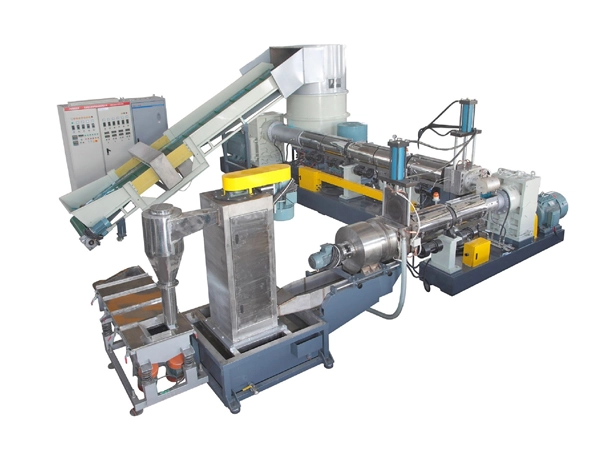
While desktop extruders handle kilos, true industrial recycling demands heavy-duty throughput. For facilities upgrading from desktop recycling to commercial polymer recovery, our Pelletizing Machine represents the ultimate processing power, transforming raw plastic waste into uniform, manufacturing-ready pellets.
| Capacity (kg/h) | Power Consumption (kw) | Water Consumption | Labour | Humidity Content |
|---|---|---|---|---|
| 100-150 | 150 | Keep water cool | 1-2 | <2% |
| 250-300 | 200 | Keep water cool | 1-2 | <2% |
| 350-400 | 280 | Keep water cool | 1-2 | <2% |
| 450-500 | 360 | Keep water cool | 1-2 | <2% |
Frequently Asked Questions
Can you recycle 100% of 3D printer waste into new filament?
In practice, no. While thermoplastic polymers can be remelted, each thermal cycle breaks down the polymer chains, resulting in brittle filament. Industry best practice requires blending recycled regrind with 30% to 50% virgin pellets to maintain the structural integrity and tensile strength required for reliable 3D printing.
Why does my recycled 3D filament keep jamming my printer?
Filament jams are almost always caused by poor diameter tolerance. If your extruder lacks an optical sensor loop to actively regulate the puller speed, the filament will swell past 1.85mm and stick inside the PTFE tube of your hotend. Additionally, failing to dry the regrind before extrusion introduces moisture bubbles that cause uneven extrusion and nozzle clogs.
Do I need an industrial shredder for desktop filament recycling?
Yes, if you are operating at any commercial scale. Desktop shredders lack the torque to crush solid infill prints, resulting in jammed blades and burned-out motors. A heavy-duty plastic crusher is required to produce the uniform 3mm to 5mm granules that desktop extruders require to prevent hopper bridging and maintain a consistent melt flow.
Authoritative Industry References
ASTM International - Standards for Plastics and Polymer Testing Specifications.
United States Environmental Protection Agency (EPA) - Guidelines on Plastic Waste Management and Sustainable Recycling Practices.
ScienceDirect (Elsevier) - Academic Research on Thermal Degradation and Rheology of Recycled Polylactic Acid (PLA) in Additive Manufacturing.