English
 العربية
 русский
 Español
 français
 português
 Deutsch
 italiano
 Türkçe
 한국어
 日本語

Choosing polyester recycling machines is not simply a matter of comparing motor power or advertised throughput. A plant processing discarded PET bottles has different equipment requirements from a textile recycler handling polyester fabric, a manufacturer recovering production scrap, or a processor turning mixed polyester waste into reusable pellets. The right investment depends on the incoming material, contamination level, required output quality, production target, and the economics of selling the recycled product.
For most commercial projects, we recommend selecting a complete recycling process before choosing individual machines. Shredding, washing, drying, extrusion, melt filtration, and pelletizing perform different jobs. Buying a high-capacity machine without matching the upstream and downstream equipment can create bottlenecks, increase operating costs, and produce material that customers will not accept.
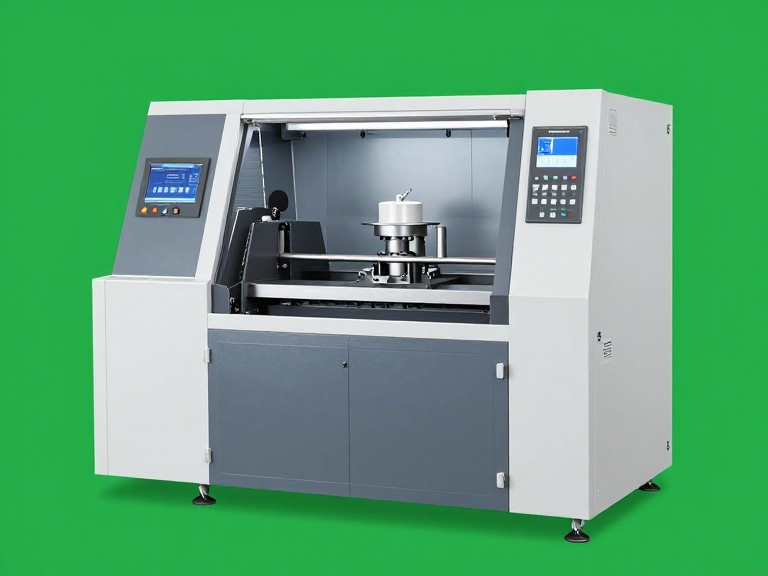
Which Polyester Recycling Machines Are Best?
The best polyester recycling machines depend on the material and final product. A heavy-duty shredder is a practical starting point for bulky polyester waste, while a washing line is essential when dirt, labels, adhesives, or other contaminants must be removed. An extruder with suitable melt filtration and a pelletizing system is generally more appropriate when the objective is to produce recycled plastic pellets.
For PET bottles, the process commonly includes sorting, size reduction, washing, drying, and either flake production or pelletizing. For polyester textiles, the first decision is whether the material can be mechanically recycled or needs a different treatment route. Blended fabrics, dyes, finishes, and mixed fibers can significantly affect processing feasibility. Do not assume that all polyester waste can enter the same machine line.
Quick Answer
Best starting point for bulky waste: A properly sized industrial shredder matched to the material's dimensions and throughput.
Best for contaminated PET bottles: A sorting and washing system followed by drying and flake processing.
Best for recycled pellets: A compatible extrusion, melt-filtration, and pelletizing line.
Best for textile waste: Equipment selected specifically for fabric, fiber, yarn, or textile-to-textile recycling rather than a generic bottle-recycling line.
Most important buying rule: Require a material-specific process proposal, realistic output specifications, and a documented acceptance test before committing to the complete line.
Quick Summary: Eight Polyester Recycling Machine Types
| Machine Type | Main Function | Best Application | Key Buying Consideration |
|---|---|---|---|
| 1. Industrial shredder | Reduces bulky waste into smaller pieces | Large PET containers, polyester-related scrap, and suitable rigid plastic waste | Material dimensions, cutting system, output size, and throughput |
| 2. Granulator or crusher | Produces more uniform flakes or granules | Pre-shredded plastic and production scrap | Screen size, knife design, and particle consistency |
| 3. Sorting system | Separates unwanted materials and polymer streams | Mixed post-consumer bottles or mixed waste | Required purity, detection technology, and contamination profile |
| 4. Washing line | Removes dirt and suitable surface contaminants | Used PET bottles and contaminated plastic feedstock | Water use, washing stages, wastewater treatment, and final cleanliness |
| 5. Drying system | Reduces moisture after washing | Washed flakes or other compatible recycled material | Target moisture, thermal conditions, and energy consumption |
| 6. Extruder | Melts and conveys compatible polymer feedstock | Clean, appropriately prepared polyester or PET feedstock | Moisture control, screw design, temperature control, and output stability |
| 7. Melt filtration system | Removes suitable solid contaminants from polymer melt | Extrusion lines requiring controlled melt cleanliness | Contaminant loading, filtration fineness, pressure stability, and maintenance |
| 8. Pelletizing system | Forms recycled polymer into pellets | Recycled resin production for further manufacturing | Pellet uniformity, cooling method, output rate, and final resin requirements |
This is a functional shortlist, not a claim that every facility needs eight separate machines. Some operations purchase integrated systems; others use existing equipment or outsource selected processing stages. The best configuration is the smallest reliable line that meets your feedstock and customer specifications.
What Are Polyester Recycling Machines?
Polyester recycling machines are industrial systems used to recover material from polyester-based waste and prepare it for reuse. In plastics recycling, a major feedstock is polyethylene terephthalate (PET), which is commonly used in beverage bottles, food packaging, and polyester fiber production. Polyester textiles can also be recycled, but their processing requirements vary with fiber composition, fabric construction, dyes, coatings, and other finishes.
The term therefore covers several equipment categories rather than one universal machine. A shredder reduces the size of incoming waste. A washing line removes contaminants. Drying equipment controls moisture. An extruder melts compatible polymer feedstock, while filtration and pelletizing equipment help prepare the material for downstream manufacturing.
Mechanical Recycling vs. Other Recycling Routes
Mechanical recycling generally preserves the polymer's basic chemical identity while changing its physical form through operations such as size reduction, washing, melting, and pelletizing. It is often attractive when the incoming material is sufficiently clean, sortable, and compatible with the intended output.
Other routes may be considered when feedstock is difficult to process mechanically, including certain textile blends or materials with unsuitable contamination. Chemical recycling can break polymers down into chemical intermediates or monomers, depending on the technology. It involves different equipment, capital requirements, energy demands, and operating controls. It should not be treated as an automatic upgrade to a conventional mechanical line.
Top 8 Polyester Recycling Machines for Commercial Operations
1. Industrial Shredder: Best for Bulky Polyester-Related Waste
An industrial shredder reduces large items into manageable pieces for subsequent processing. It can be useful when the feedstock includes bulky containers, rigid plastic scrap, or suitable production waste that cannot be fed efficiently into a downstream granulator or washing system.
For commercial users, the important specification is not just the advertised kilograms per hour. The machine must handle the actual dimensions, wall thickness, shape, and toughness of the material. Feed consistency, knife wear, motor loading, and the size of the discharge material all affect line performance.
We recommend evaluating a shredder as part of the full process. If the output still requires a second size-reduction stage, confirm that both machines can operate at compatible rates. A large shredder feeding an undersized granulator simply moves the bottleneck downstream.

For a machine designed for industrial size reduction, review XJG's Horizontal Shredder. Confirm with the supplier whether the selected configuration is suitable for your specific PET or polyester-related feedstock before placing an order.
2. Granulator or Crusher: Best for Consistent Flake Size
A granulator or crusher uses rotating knives and a screen to reduce material into smaller particles. In a multi-stage recycling line, it may follow a shredder to produce a more uniform size for sorting, washing, or further processing.
Uniform flakes can improve handling and help downstream equipment operate more consistently. However, a smaller screen does not automatically produce a better result. Excessive size reduction can increase energy use, create fines, accelerate knife wear, and complicate washing or separation.
For buyers, the right question is: what particle size does the next machine require? Specify the desired size distribution, acceptable fines, and expected contamination. If your supplier proposes both a shredder and a granulator, ask for a flow diagram explaining why two stages are needed for your material.
3. Sorting System: Best for Mixed or Contaminated Feedstock
Sorting equipment separates material streams before they enter more expensive processing stages. Depending on the feedstock, this may involve manual inspection, conveyors, metal separation, optical sorting, or other detection technologies.
Sorting is particularly important when a PET recycling operation receives mixed bottles, labels, closures, colors, or polymers. The exact configuration should reflect the incoming waste stream. A clean, single-source production scrap stream may need only basic inspection, while mixed post-consumer material may require substantially more separation.
For commercial users, sorting is a quality-control investment. Contaminants can affect recycled resin properties, create processing interruptions, and reduce the value of the final material. Yet sophisticated sorting technology is not always economical for a small, consistent feedstock. Begin with a waste audit and determine which contaminants actually limit the product's saleability.
4. Washing Line: Best for Used PET Bottles
A washing line removes suitable surface contamination from plastic feedstock. Depending on the incoming material and required output, a line may include pre-washing, label removal, friction washing, separation tanks, rinsing, and water-handling equipment.
Used PET bottles can carry beverage residues, dirt, labels, adhesives, and other materials. Washing performance depends on the contaminants, temperature, chemistry, residence time, mechanical action, and separation process. One washing stage rarely solves every contamination problem.
We recommend asking for the expected cleanliness of the output and the test method used to verify it. Also request estimates for water consumption, wastewater treatment, heating, and maintenance. A low equipment price may not represent a low operating cost if the washing system uses excessive water or cannot meet local discharge requirements.
5. Drying System: Best for Controlling Moisture
Drying removes moisture after washing or from feedstock that requires conditioning before processing. The appropriate system depends on the material form, throughput, inlet moisture, target moisture, and sensitivity of the downstream process.
For PET, moisture management is particularly important during melt processing because excessive moisture can contribute to polymer degradation and lower molecular weight. A conventional surface dryer may remove water clinging to flakes, but it is not necessarily equivalent to a process designed to achieve the low moisture level required before PET extrusion or other sensitive processing.
Buyers should distinguish between surface drying and deeper moisture control. Ask the supplier to state the required inlet conditions, expected outlet moisture, measurement method, and operating conditions. For demanding PET applications, a properly engineered drying and material-handling system can be more valuable than simply purchasing a larger extruder.
6. Extruder: Best for Converting Prepared Feedstock into Melt
An extruder conveys and melts compatible polymer material through a heated barrel and screw. In recycling, it can prepare clean, appropriately conditioned flakes or regrind for melt filtration, pelletizing, or direct downstream processing.
Extruder selection must match the polymer, feedstock form, contamination level, moisture, required output, and product quality. Screw design, venting, temperature control, torque, and feeding consistency all influence performance. A standard extruder should not be assumed to handle every PET or textile-derived feedstock without pretreatment or modification.
For example, clean and uniform production scrap may be relatively straightforward to process, while wet, dirty, mixed, or highly variable material can create unstable feeding, excessive filtration demand, or inconsistent output. The correct approach is to validate the material and process before sizing the machine.
Explore XJG's SJ Single Screw Extruder as a reference for extrusion equipment. Ask XJG to confirm the polymer compatibility and recycling configuration required for your application rather than assuming a general-purpose extruder is a complete recycling solution.
7. Melt Filtration System: Best for Controlling Solid Contamination
Melt filtration removes suitable solid contaminants from molten polymer before the material reaches the next process. Depending on the design, a system may use screen changers, filter packs, or continuous filtration technology.
Filtration is not a substitute for sorting and washing. It is generally intended to capture particles that can be retained by the filter, not to remove all dissolved substances, incompatible polymers, or chemical contamination. Fine filtration may also increase pressure drop and maintenance requirements, particularly when the feedstock contains a heavy contaminant load.
When comparing suppliers, provide information about the type and quantity of contamination. Ask how the filter is changed, how much material may be lost during purging, how pressure is monitored, and what level of filtration the process can sustain at the target throughput. These details matter more than a headline mesh rating alone.
8. Pelletizing System: Best for Producing Recycled Resin Pellets
A pelletizing system converts a polymer melt into pellets for easier storage, transport, dosing, and reuse in manufacturing. Depending on the polymer and process, the system may use strand pelletizing, water-ring pelletizing, or underwater pelletizing.
Pellet shape, size consistency, cooling, moisture management, and production stability influence whether the output meets a buyer's requirements. The best method depends on the resin, melt characteristics, desired capacity, and downstream application. Pelletizing cannot compensate for badly contaminated feedstock or polymer that has already degraded beyond the required specification.
For commercial users, the most important acceptance criteria are the actual specifications of the recycled resin, not the visual appearance of the pellets alone. If your customers require defined intrinsic viscosity, color, contamination, or mechanical properties, include these requirements in the process design and performance test.
Polyester Recycling Machines: Comparison Table
| Machine | Where It Fits | Relative Process Priority | Common Reason to Upgrade | What to Verify Before Buying |
|---|---|---|---|---|
| Shredder | Front end of bulky-waste processing | High when feedstock is too large | Feed bottlenecks or inconsistent size reduction | Real-material throughput, output size, knife life |
| Granulator | Size reduction after sorting or shredding | Feedstock-dependent | Uneven flakes or poor downstream feeding | Screen, fines, particle distribution, energy use |
| Sorting system | Feedstock preparation | High for mixed waste | Output contamination or inconsistent quality | Detection accuracy, material recovery, reject rate |
| Washing line | Contaminated plastic feedstock | High for dirty post-consumer material | Residues or contamination exceed limits | Cleanliness, water use, wastewater load |
| Drying system | After washing and before sensitive processing | High when moisture limits quality | Unstable extrusion or moisture-related degradation | Target moisture, energy, measurement method |
| Extruder | Melt processing | High for pellet production | Unstable melt, low output, or poor process control | Polymer compatibility, screw design, venting |
| Melt filtration | After melting and before forming | Depends on contamination and product specification | Frequent screen changes or contaminated output | Pressure stability, filter area, contaminant loading |
| Pelletizer | Final resin preparation | High when the product is pellets | Inconsistent pellets or unstable cutting | Pellet quality, cooling, rate, resin specification |
For a plant producing clean recycled flakes, a complete extrusion and pelletizing section may not be necessary. For a plant selling recycled pellets, however, skipping critical drying, filtration, or melt-processing controls can undermine product quality. Select equipment around the final commercial product, not around the number of machines in a supplier's catalogue.
How a Polyester Recycling Line Works
A recycling line is a sequence of coordinated operations. The exact process depends on whether the input is PET bottles, clean manufacturing scrap, polyester fiber, or mixed textiles. A typical mechanical route for used PET bottles may follow these steps:
Inspect and sort: Remove unacceptable materials and separate polymer or color streams as required.
Reduce size: Use a shredder or granulator to create pieces that can be handled by the next stage.
Wash and separate: Remove suitable contaminants, labels, residues, and other unwanted materials through a process matched to the feedstock.
Rinse and dry: Control residual contamination and moisture according to the next process's requirements.
Extrude where required: Melt compatible material under controlled conditions.
Filter the melt: Remove appropriate solid contaminants to meet the process specification.
Pelletize and inspect: Form pellets and test them against the buyer's requirements.
Some facilities stop after flake production; others proceed to pellets or a new product. A textile recycling plant may require a very different process, such as fabric sorting, fiber opening, or specialized chemical processing. Polyester-cotton blends and fabrics containing elastane, coatings, or complex trims require particular attention because their components may not be compatible with a simple PET bottle line.
Match Every Stage to the Same Production Target
When one machine has a rated capacity much higher than the next stage, the line cannot reliably achieve the larger number. For example, a shredder rated at 1,500 kg/h does not mean the complete line will produce 1,500 kg/h of saleable recycled pellets. Washing losses, sorting rejects, drying constraints, filtration changes, and product-quality limits all affect usable output.
Ask suppliers to provide a complete process flow diagram, expected material losses, operating assumptions, and estimated finished-product output. Capacity should be discussed at the line level, with the feedstock and product specification clearly defined.
Horizontal Shredder: Models and Specifications
XJG's Horizontal Shredder is one equipment option to evaluate for suitable bulky plastic waste and industrial size-reduction duties. The specifications below are the supplied model data. They should be treated as manufacturer-provided figures requiring confirmation for your actual material; they are not a guarantee of PET-specific throughput or finished-line capacity.
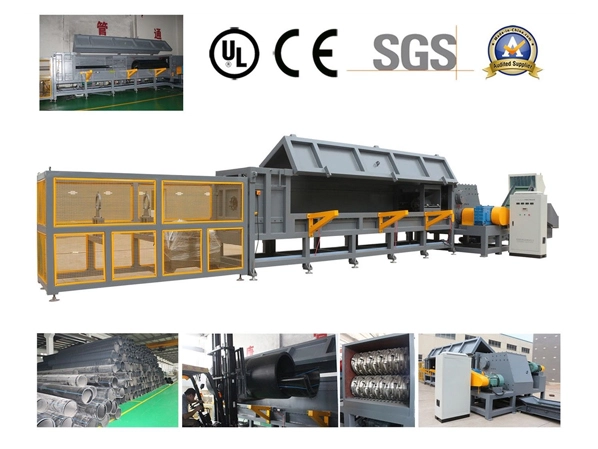
Illustrative recycling equipment image supplied for the XJG equipment section. Confirm the exact machine configuration with the manufacturer.
| Specification | XJG-W600 | XJG-W800 | XJG-W1000 | XJG-W1200 | XJG-W1600 |
|---|---|---|---|---|---|
| Shaft diameter | 350 mm × 2 | 450 mm × 2 | 550 mm × 2 | 650 mm × 2 | 430 mm × 4 |
| Moving knife quantity | 60 | 104 | 128 | 152 | 300 |
| Maximum capacity | 800 kg/h | 1,000 kg/h | 1,500 kg/h | 1,800 kg/h | 2,000 kg/h |
| Motor power | 30 kW × 2 | 37 kW × 2 | 45 kW × 2 | 55 kW × 2 | 75 kW × 2 |
| Host weight | 11,000 kg | 14,000 kg | 20,000 kg | 23,000 kg | 25,000 kg |
| Chamber size | 6200L × 670W | 6200L × 870W | 6200L × 1100W | 6200L × 1300W | 6200L × 1700W |
| Dimensions | 10000L × 2500W × 1800H | 10000L × 2900W × 2000H | 10000L × 3260W × 2150H | 10000L × 3460W × 2300H | 10000L × 3700W × 2500H |
Confirm the units and interpretation of the chamber dimensions, overall dimensions, and installation clearances with XJG before finalizing the layout. Also verify whether the stated maximum capacity applies to your feedstock type, material size, moisture level, and required discharge size.
Which Shredder Model Should You Consider?
Smaller throughput requirement: Compare the XJG-W600 and XJG-W800 against your real hourly feed rate, planned operating hours, and future expansion needs.
Higher-volume processing: The XJG-W1000 and XJG-W1200 list higher maximum capacities, but you should validate throughput with your specific material and downstream equipment.
Large-scale operation: The XJG-W1600 lists the highest maximum capacity in the supplied range. Its four-shaft configuration, weight, footprint, power requirements, and maintenance access deserve careful engineering review.
Do not select the largest model simply because the budget permits it. A machine that is oversized for the incoming material may increase capital and energy costs without increasing saleable output. Conversely, a shredder that is too small can constrain an otherwise efficient line. A material trial is the most useful way to reduce this uncertainty.
Pros and Cons of Investing in Polyester Recycling Machines
| Advantages | Limitations and Risks |
|---|---|
| Can recover value from suitable plastic or textile waste | Feedstock quality and market demand determine actual profitability |
| Can reduce waste disposal needs when recovery is technically and commercially viable | Contaminated or mixed materials may require costly sorting and treatment |
| Allows manufacturers to recover certain in-house production scrap | Recycled resin may not match virgin material performance in every application |
| Can create saleable flakes, regrind, or pellets | Output must meet customers' material and quality specifications |
| Modular lines can support phased capacity expansion | Equipment from different suppliers may be difficult to integrate without clear interface specifications |
| Improved process control can support more consistent output | Energy, labor, water, maintenance, downtime, and reject rates affect operating costs |
Recycling equipment is worth buying when the business has dependable feedstock, a technically viable process, a defined market for the output, and realistic operating-cost assumptions. It is not automatically profitable simply because waste is available or because recycled material has environmental appeal.
How to Choose a Polyester Recycling Machine Manufacturer
For an industrial purchase, supplier evaluation should focus on process competence, documented performance, service support, and the ability to deliver a complete solution. A low quotation is not a meaningful advantage if the equipment cannot process the feedstock or if the line requires expensive modifications after installation.
1. Confirm Material Compatibility
Send the supplier representative samples or detailed specifications of the actual feedstock. Include polymer type, dimensions, contamination, moisture, colors, labels, additives, and any mixed materials. For textile waste, identify fiber blends, coatings, trims, and elastane content where possible.
Ask the manufacturer to state which materials the proposed line can and cannot handle. This is particularly important when evaluating a machine originally designed for general plastic recycling for use with polyester or PET.
2. Request a Process Flow Diagram
A credible proposal should show the complete process from feedstock intake to the saleable output. It should identify every major machine, conveyor, buffer, utility connection, and waste or wastewater stream. The diagram should also explain where sorting rejects, fines, labels, and other separated materials go.
When the scope includes multiple machines, clarify which supplier is responsible for integration, controls, safety interlocks, commissioning, and performance verification. Do not assume that purchasing individual machines from different vendors automatically creates a reliable production line.
3. Verify Capacity Under Real Conditions
Ask how the rated capacity was measured. A figure without a defined material, input size, contamination level, output specification, or operating condition is not enough for a purchasing decision. Request a trial or a written acceptance test that uses representative feedstock.
For commercial users, distinguish between instantaneous processing capacity, sustained operating throughput, and finished-product output. A line may briefly process material at a high rate but produce less saleable output over a full shift due to cleaning, filter changes, maintenance, or quality rejects.
4. Compare Quality Controls and Service Support
Evaluate component specifications, guarding, emergency stops, electrical standards, maintenance access, spare-parts availability, operator training, and documentation. Confirm the applicable electrical and machinery-safety requirements in the installation country with qualified local professionals.
Also ask what remote support is available, how service requests are handled, which wear parts should be stocked locally, and what warranty exclusions apply. For a production plant, downtime and delayed spare parts can cost more than a modest difference in initial purchase price.
5. Compare Total Cost of Ownership
Request a quotation that separates equipment, controls, conveyors, installation, commissioning, shipping, training, spare parts, and optional equipment. Estimate operating expenses using the expected hours per year and the actual utility requirements. Include water treatment and wastewater management when washing is part of the process.
XJG provides a range of industrial equipment, including the Plastic Recycling Machine. For a polyester recycling project, use the product page as a starting point for discussion, then request a configuration specifically matched to the incoming material and final product.
Manufacturer Selection Checklist
Does the manufacturer understand your specific feedstock?
Can it provide a process flow diagram and clearly define the scope of supply?
Are throughput and finished-product quality linked to measurable acceptance criteria?
Are installation dimensions, utilities, and local compliance responsibilities documented?
Are operating costs, consumables, maintenance intervals, and expected wear parts explained?
Are training, commissioning, spare parts, warranty, and after-sales support included or priced separately?
Cost-Benefit Analysis: When Is an Upgrade Worth It?
There is no reliable universal price for a polyester recycling line. A basic size-reduction machine and a complete bottle-to-pellet plant have very different scopes. Capacity, automation, material preparation, washing stages, filtration, pelletizing, installation, and environmental controls all affect the investment.
Rather than comparing machine prices alone, estimate the value generated by each additional tonne of acceptable output. The following calculation provides a practical framework:
Estimated annual operating contribution
= Annual saleable output × net contribution per tonne − annual operating costs − annualized capital costs
Use saleable output rather than total input. Account for sorting rejects, process losses, downtime, quality discounts, labor, electricity, water, maintenance, consumables, disposal, and financing or depreciation according to your accounting method.
For example, an upgrade that increases nominal throughput may still be a poor investment if it produces more off-spec material or requires disproportionate energy and maintenance. By contrast, improving washing, drying, or filtration may increase the value of the output even if the number of tonnes processed per hour changes very little.
Upgrade Priorities by Problem
| Observed Problem | Upgrade to Investigate | Why It May Help | Measure Before and After |
|---|---|---|---|
| Bulky feedstock slows feeding | Shredder or feed preparation | Can improve material handling and stabilize feeding | Throughput, power use, particle size, downtime |
| Output contains too many unwanted materials | Sorting or washing improvements | May reduce contamination and improve product acceptance | Contamination rate, reject rate, sale price |
| Moisture causes processing instability | Drying and moisture control | Can improve process stability when moisture is the limiting factor | Inlet/outlet moisture, melt stability, product quality |
| Frequent filter changes interrupt production | Better upstream cleaning or filtration design | May reduce contamination load and unscheduled stops | Filter-change frequency, pressure, lost production |
| Pellet quality varies | Extrusion controls or pelletizing adjustments | May improve consistency when the root cause is process-related | Pellet dimensions, defects, material properties |
| Demand exceeds reliable output | Line balancing or capacity expansion | Can remove the actual bottleneck | Finished tonnes per shift, utilization, cost per tonne |
For a plant with limited capital, we recommend fixing the most expensive verified bottleneck first. Do not purchase a new extruder if poor feedstock preparation is the real cause of downtime. Do not invest in finer melt filtration before checking whether upstream sorting and washing can remove a large share of the contamination more economically.
Common Mistakes When Buying Polyester Recycling Machines
Choosing Equipment Based Only on Maximum Capacity
Advertised capacity may refer to a particular material under favorable conditions. Real feedstock can differ in size, density, moisture, contamination, and feeding behavior. Ask for a performance test or documented operating data that reflects your application.
Confusing PET Bottle Recycling with Textile Recycling
PET bottles and polyester fabrics are not interchangeable feedstocks. A bottle line may be unsuitable for fabric waste containing blended fibers, dyes, coatings, or sewing components. Define the feedstock first, then choose the process.
Ignoring Moisture and Contamination
Wet or dirty material can affect extrusion, melt quality, filtration, and final product performance. Buyers should establish feedstock acceptance limits and specify how the line will deal with contamination before choosing downstream equipment.
Assuming Pellets Automatically Meet Product Requirements
Uniform pellets are not proof of consistent polymer properties. If the intended application requires specific mechanical, thermal, color, or other characteristics, test the material against those requirements. Applications with demanding food-contact or other regulated requirements may need additional process validation and traceability.
Underestimating Utilities and Plant Layout
Large shredders and complete washing or extrusion lines require adequate floor space, foundations where applicable, electrical capacity, maintenance clearance, and material-handling arrangements. Washing systems may also require wastewater treatment and permits. Resolve these issues before ordering, not after delivery.
Buying a Complete Line Without a Defined Acceptance Test
A quotation should establish how performance will be judged. Specify the feedstock, sustained throughput, output quality, operating duration, and conditions under which the test will take place. Define responsibilities and remedies in the purchase contract with qualified commercial and legal advice where appropriate.
Expert Recommendation: Build Around the Material and the Customer
Our recommendation is to begin with two questions: what material can you reliably obtain, and what recycled product can you reliably sell? Those answers should determine the process, machine specifications, and budget.
For clean, consistent in-house production scrap, a relatively simple size-reduction or extrusion solution may be sufficient, subject to the material's properties and the target product. For dirty post-consumer PET bottles, prioritize sorting, washing, drying, and contamination control before spending heavily on downstream capacity. For recycled pellet production, evaluate the complete extrusion, filtration, and pelletizing system as one coordinated process.
For textile recycling, do not purchase a conventional PET bottle line until the manufacturer has assessed the actual fabric composition and intended recovery route. Mixed polyester blends may require a different technical approach and a separate economic evaluation.
XJG can be considered as an equipment supplier when evaluating industrial recycling and size-reduction options. Start with the Horizontal Shredder or the broader Plastic Recycling Machine range, then request a process proposal for your specific feedstock. The strongest proposal will explain not only what machines are supplied, but also what material each stage accepts, what output it is expected to deliver, and how performance will be verified.
Our Final Buying Advice
Collect representative feedstock samples and define their composition and contamination.
Choose the target product: flakes, regrind, pellets, recovered fiber, or another output.
Set measurable output-quality requirements with potential customers.
Request a complete process flow and realistic sustained-capacity estimate.
Compare total installed and operating costs, not just the equipment quotation.
Make the purchase conditional on clearly defined technical specifications and acceptance criteria.
The best polyester recycling machines are not necessarily the largest or most automated. They are the machines that consistently turn your available material into a product customers will buy, at an operating cost the business can sustain.
Frequently Asked Questions About Polyester Recycling Machines
1. What are polyester recycling machines used for?
They process polyester-related waste into reusable material. Depending on the feedstock and line configuration, the output may be cleaned flakes, regrind, recycled pellets, or recovered textile material. Different applications require different machines and process stages.
2. Can one machine recycle all types of polyester waste?
No. PET bottles, rigid plastic scrap, polyester fabric, fiber, and blended textiles have different physical and processing requirements. A machine suitable for one feedstock may be unsuitable for another. Confirm compatibility using representative material samples.
3. What is the most important machine in a PET recycling line?
There is no universal answer. A shredder or granulator may be critical for size reduction, while washing and drying may determine cleanliness and moisture control. If the final product is pellets, extrusion, filtration, and pelletizing are also important. The limiting stage depends on the material and required output.
4. How much do polyester recycling machines cost?
Costs vary substantially with capacity, automation, feedstock preparation, washing, drying, extrusion, filtration, pelletizing, and installation scope. Request an itemized quotation and compare total installed cost, expected operating cost, and saleable output instead of relying on a generic price range.
5. Can PET bottles be turned directly into recycled pellets?
Not usually without appropriate preparation. Bottles commonly require sorting, size reduction, washing, separation, and drying before melt processing. The exact process depends on contamination and the intended pellet specification.
6. Why is drying important when recycling PET?
Moisture can contribute to degradation during melt processing. The required drying method depends on the feedstock and process. Surface-water removal alone may not meet the moisture requirements of a PET extrusion process, so the target should be specified and measured.
7. How do I choose the capacity of a polyester recycling machine?
Calculate the required finished output per shift and work backward through expected process losses, reject rates, downtime, and the capacity of every stage. Ask the manufacturer to validate sustained throughput using material similar to your own rather than relying solely on a maximum rated figure.
8. Is a horizontal shredder suitable for PET recycling?
It may be suitable for certain size-reduction duties, but suitability depends on the shredder design and the material's dimensions, thickness, and behavior during cutting. Confirm the intended application, discharge size, throughput, and wear-part requirements with the manufacturer before purchase.
9. What should I ask a polyester recycling machine manufacturer?
Ask about material compatibility, process flow, sustained throughput, output quality, utilities, wear parts, maintenance, installation, safety documentation, commissioning, warranty, and acceptance testing. Require the supplier to define its responsibilities and the measurable conditions for successful performance.
10. Is mechanical recycling suitable for polyester textile blends?
It depends on the blend and the intended output. Pure polyester textiles may be more straightforward than fabrics containing cotton, elastane, coatings, trims, or other fibers. Obtain a feedstock assessment and process trial before committing to equipment designed primarily for PET bottles.
References
The following sources provide technical and regulatory context for evaluating polyester and PET recycling processes. Consult the current guidance relevant to your feedstock, product, and operating location.
PETCORE Europe — Industry information on PET packaging and recycling in Europe.
Association of Plastic Recyclers (APR) — Resources related to plastics recyclability, recycled material quality, and recycling design considerations.
European Commission: Plastics — Government information on plastics policy, waste, and recycling in the European Union.