English
 العربية
 русский
 Español
 français
 português
 Deutsch
 italiano
 Türkçe
 한국어
 日本語

Choosing an industrial plastic extrusion machine manufacturer is not simply a matter of comparing machine prices or factory size. The right supplier must understand your polymer, target output, product dimensions, downstream equipment and production conditions. A high-capacity extruder that cannot maintain stable melt quality or dimensional accuracy can cost more in scrap and downtime than a less expensive machine ever saves.
For buyers evaluating industrial plastic extrusion machine manufacturers, our advice is to shortlist suppliers by application first. Pipe production, plastic profiles, sheet extrusion, compounding and recycling require different screw designs, tooling and line configurations. This guide compares six manufacturers worth evaluating, including established international equipment companies and XJGMACHINE for single-screw extrusion and plastic pipe production applications.
For large integrated extrusion projects, KraussMaffei and Davis-Standard deserve consideration because of their broad engineering and application portfolios. Battenfeld-Cincinnati is a strong candidate for pipe, profile and sheet production lines. JWELL and USEON offer extensive Chinese-manufactured extrusion solutions across several polymer-processing applications. XJGMACHINE is worth shortlisting when you need a practical single-screw extruder, pipe production equipment or a cost-conscious customized production line. The best choice depends on your material, output target, local service requirements and total cost of ownership—not a universal ranking.
Which Industrial Plastic Extrusion Machine Manufacturers Are Worth Shortlisting?
Our six-company shortlist is based on equipment specialization, product coverage, application suitability and the type of buyer each supplier may serve. It is not a verified ranking by sales volume, market share or customer satisfaction. Manufacturers in this industry often specialize in different processes, so comparing them as if they all sell interchangeable machines would be misleading.
For most buyers, the first decision should be whether the project requires a standalone extruder or a complete extrusion line. A standalone machine may be suitable when you already own compatible tooling and downstream equipment. A complete line is usually the better route when you are starting a new production process and need the extruder, die, calibration, cooling, haul-off, cutting and control systems to work together.
What Is an Industrial Plastic Extrusion Machine?
An industrial plastic extrusion machine melts and processes polymer material, then forces the melt through a shaped die to produce a continuous plastic product. Depending on the die and downstream configuration, the output can be a pipe, tube, profile, sheet, film, filament or other continuous plastic form.
A typical extrusion system includes a feeding unit, heated barrel, rotating screw, drive motor, gearbox, temperature-control system and extrusion die. A complete production line may also include a vacuum calibration tank, cooling tank, haul-off unit, cutter, winder, printer and automatic control system.
Extrusion is widely used in construction, infrastructure, packaging, agriculture, automotive manufacturing, electrical applications and recycling. The machine configuration must match the material and product. A PVC pipe line, for example, may require a different screw and extrusion arrangement from a PE pipe line or a flexible polymer profile line.
How Does an Industrial Plastic Extrusion Machine Work?
Plastic resin, pellets or prepared material enter the hopper and move into the heated barrel. The rotating screw conveys the material forward while applying heat and mechanical energy. The polymer melts, mixes and builds pressure before passing through the die. The die determines the initial shape of the extrudate.
After leaving the die, the material must be cooled and controlled. Pipe lines commonly use sizing sleeves, vacuum calibration and cooling tanks to maintain diameter and roundness. Profiles may need dedicated calibration tables. Sheet and film lines use rolls or other cooling and thickness-control systems. Haul-off equipment controls line speed, while cutting or winding equipment handles the finished product.
The extrusion process is a connected system. Increasing screw speed does not automatically increase saleable output. If the die, cooling system or haul-off cannot handle the additional material, higher speed may create dimensional instability, surface defects or excessive scrap.
How We Evaluated These Industrial Plastic Extrusion Machine Manufacturers
We recommend comparing manufacturers against five practical criteria rather than relying on a simple top-ten list:
Application coverage: Does the supplier build equipment for your actual product, such as PE pipe, PVC profile, plastic sheet or polymer compounding?
Process engineering: Can the supplier recommend a suitable screw, L/D ratio, die and downstream configuration for your material?
Production capability: Can the proposed line reach your required output while maintaining product quality?
Service and spare parts: Can the manufacturer support commissioning, troubleshooting, training and replacement components?
Total cost of ownership: Does the quotation account for energy consumption, tooling, maintenance, installation, downtime and expected service life?
The six companies below are presented as a practical shortlist across different market segments. Their order is editorial, not a formal performance ranking. Buyers should verify current specifications, delivery schedules and service coverage directly with each supplier.
01 · Germany · Integrated extrusion systems
1. KraussMaffei
Best for: Large industrial projects, pipe extrusion, profile production and integrated processing systems.
KraussMaffei is an established machinery supplier with a broad plastics-processing portfolio. Its extrusion offering covers pipe and profile production as well as other polymer-processing applications. For pipe manufacturing, its published portfolio includes single-screw and twin-screw extruders, pipe heads and downstream equipment.
For buyers planning a large or technically demanding production facility, the attraction is the ability to evaluate an integrated line rather than purchasing an extruder as an isolated machine. Pipe production requires coordination between the extruder, die, calibration, cooling, haul-off and cutting equipment. A supplier with system-level engineering capability can help reduce integration problems.
Why consider KraussMaffei?
Broad extrusion technology portfolio for industrial applications.
Pipe and profile solutions with associated tooling and downstream equipment.
Suitable for projects where process engineering and integrated systems are important.
Technology-center and application-development capabilities can be relevant for complex projects.
What should buyers consider?
A large international supplier may not be the most economical choice for a small, straightforward production project. Request a quotation based on the exact product specification and compare the complete line cost, installation scope, commissioning arrangements and local service availability. Do not pay for automation or capacity that your factory cannot use.
Our view: Put KraussMaffei on the shortlist for high-specification pipe and profile projects where integration and process engineering justify a substantial equipment investment.
02 · United States · Broad extrusion technology
2. Davis-Standard
Best for: Pipe, profile, tubing, sheet, film and specialized extrusion applications.
Davis-Standard offers a broad range of extrusion equipment, including single-screw and twin-screw extruders, coextrusion systems and specialized machinery. Its application areas include pipe and tubing, medical tubing, automotive components, sheet and flexible packaging.
This breadth is useful for manufacturers producing technical or multi-layer products. For example, a project involving multilayer tubing or a specialized polymer structure may require more than a standard extruder. Screw design, feed systems, process controls, die configuration and downstream equipment all influence the final product.
Why consider Davis-Standard?
Wide range of extrusion technologies and application experience.
Solutions for pipe, profile, tubing, sheet and specialized products.
Options for single-screw, twin-screw and coextrusion configurations.
Relevant for manufacturers that need application-specific engineering.
What should buyers consider?
Do not assume that a supplier's broad portfolio means every machine is equally suitable for your production target. Ask for references and technical proposals for the exact polymer, product dimensions and output range. For medical or other precision tubing, examine process validation, dimensional control and cleanliness requirements in addition to nominal machine capacity.
Our view: Davis-Standard is worth evaluating for technical extrusion applications where process customization and product consistency are more important than purchasing the lowest-cost machine.
03 · Europe · Pipe, profile and sheet lines
3. Battenfeld-Cincinnati
Best for: Plastic pipe, profile, sheet and board production.
Battenfeld-Cincinnati focuses on extrusion equipment and complete production systems. Its portfolio includes single-screw and twin-screw extruders, pipe tooling, profile tooling, downstream equipment and control systems. The company is particularly relevant to buyers producing PE, PVC and other polymer products for construction, infrastructure and industrial applications.
For pipe manufacturers, the downstream section deserves as much attention as the extruder itself. Vacuum calibration, cooling tanks, haul-off equipment and cutting units influence line stability and finished-pipe dimensions. A supplier offering coordinated downstream systems can simplify project planning and equipment integration.
Why consider Battenfeld-Cincinnati?
Strong application focus on pipe, profile, sheet and board extrusion.
Range of extruder technologies for different polymer processes.
Pipe tooling and downstream equipment available within its product portfolio.
Relevant for buyers seeking a coordinated production-line solution.
What should buyers consider?
Check whether the supplier's proposed configuration matches your pipe diameter range, resin formulation, required wall thickness and production speed. A line designed for one product range may not deliver economical performance across every diameter. Ask for a configuration proposal that explains changeover time and the limits of the production range.
Our view: Consider Battenfeld-Cincinnati when pipe or profile manufacturing is the central business and the project requires coordinated extrusion and downstream equipment.
04 · China · Broad plastic extrusion machinery
4. JWELL
Best for: Buyers comparing a broad range of Chinese-made extrusion production lines.
JWELL is a major Chinese manufacturer of plastic polymer extrusion machinery. Its product range covers pipe, profile, sheet, plate, film, compounding, pelletizing and plastic recycling equipment. This wide coverage makes the company relevant to manufacturers that want to compare multiple production-line categories within one supplier group.
For buyers planning to expand from one plastic product into related products, a broad equipment portfolio can be useful. A factory producing plastic pipe today may later consider profile extrusion, sheet production or recycling. The important question is whether the supplier has proven experience with the specific process, not simply whether the product appears in its catalogue.
Why consider JWELL?
Broad range of plastic extrusion machinery and auxiliary equipment.
Production-line options across pipe, profile, sheet, film and recycling.
Chinese manufacturing base with an international export presence.
Useful for buyers comparing multiple equipment categories and configurations.
What should buyers consider?
Because the product range is extensive, request the technical team responsible for your specific machine category. Ask for comparable installations, product samples and a clear list of included equipment. Confirm whether the quotation includes installation guidance, commissioning support, operator training and spare parts.
Our view: JWELL is a sensible company to compare when you need a broad extrusion machinery portfolio and want to evaluate different line configurations from a Chinese supplier.
05 · China · Compounding and specialized extrusion
5. USEON
Best for: Polymer compounding, foam extrusion, sheet production, recycling and specialized processing projects.
USEON is a Chinese extrusion machinery manufacturer whose portfolio includes twin-screw extruders, polymer compounding systems, foam extrusion lines, sheet extrusion and recycling-related solutions. Its positioning is particularly relevant to buyers whose process involves material formulation, mixing, devolatilization or specialized polymer processing rather than only producing a simple continuous profile.
For a compounding project, the extruder must do more than melt material. Feeding accuracy, screw configuration, mixing intensity, temperature control, venting and pelletizing all influence the final compound. A machine selected only by motor power or advertised throughput may not deliver the required material properties.
Why consider USEON?
Specialized equipment for compounding and polymer processing.
Solutions for foam, sheet, recycling and related applications.
Process-oriented approach that can be useful for material-development projects.
Relevant for factories with more demanding material preparation requirements.
What should buyers consider?
Confirm that the supplier has processed your actual material formulation or a technically comparable material. Request a trial using your raw materials where possible. Review the feeding system, screw configuration, venting, pelletizing or downstream equipment and the quality measurements used to assess the output.
Our view: USEON deserves consideration when material processing and compounding are central to the project. For a standard pipe line, compare it against suppliers whose main specialization is pipe extrusion.
06 · China · Single-screw extruders and pipe equipment
6. XJGMACHINE
Best for: Single-screw plastic extrusion, plastic pipe production equipment and buyers seeking practical customized machinery.
XJGMACHINE, associated with Zhangjiagang Qingchenyu Machinery Co., Ltd., offers plastic extrusion equipment including SJ single-screw extruders and SJSZ conical twin-screw extruders. Its product range also includes plastic pipe production lines, recycling machinery, crushers, pulverizers and auxiliary equipment.
For a factory purchasing its first extrusion machine or adding capacity to an existing workshop, the ability to discuss a practical configuration is important. Buyers should not begin with the largest model in a catalogue. They should start with the material, finished product dimensions, required hourly output and available factory utilities.
Why consider XJGMACHINE?
Product range covering single-screw and conical twin-screw extrusion equipment.
Plastic pipe production and related auxiliary machinery.
Options for evaluating an extruder alongside supporting equipment.
Relevant to buyers comparing practical production configurations and equipment investment.
SJ single-screw extruder models
XJGMACHINE's published SJ series specifications provide a starting point for comparing machine sizes. The capacity figures below are the listed ranges, not guaranteed output for every polymer or product configuration.
| Model | L/D | Listed capacity | Screw speed | Power | Center height |
|---|---|---|---|---|---|
| SJ-45 | 25–38:1 | 20–80 kg/h | 120 r/min | 7.5–22 kW | 1000 mm |
| SJ-65 | 25–38:1 | 60–200 kg/h | 120 r/min | 37–55 kW | 1000 mm |
| SJ-75 | 25–38:1 | 120–400 kg/h | 120 r/min | 55–110 kW | 1000 mm |
| SJ-90 | 25–38:1 | 250–600 kg/h | 120 r/min | 55–180 kW | 1200 mm |
| SJ-120 | 25–38:1 | 600–1200 kg/h | 90 r/min | 90–315 kW | 1200 mm |
Note: Confirm the exact screw diameter, L/D configuration, motor rating, material, die, operating conditions and output assumptions with XJGMACHINE before ordering. The published capacity range should not be treated as a guaranteed production rate.
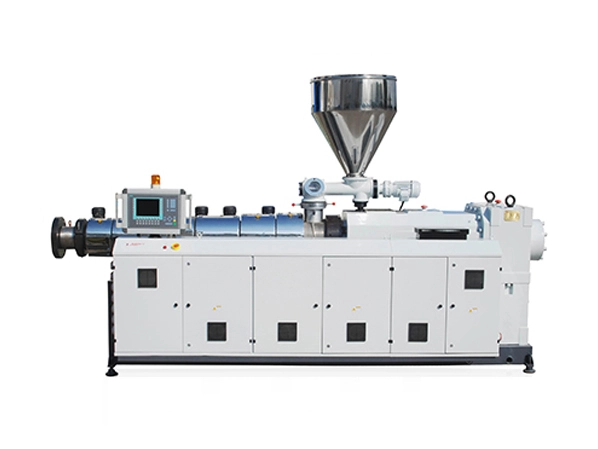
SJ Single Screw Extruder
The SJ series is designed for continuous plastic extrusion. It is worth evaluating when your application is compatible with single-screw processing and you need a machine selected around your required throughput and product specification.
What should buyers consider?
Ask XJGMACHINE to confirm the suitable model based on your actual polymer and finished product. A PE pipe project, PVC profile project and recycled-plastic extrusion project may need different screw designs and supporting systems. Confirm the die, calibration, cooling, haul-off and cutting equipment where applicable. Also request a written scope of supply, installation requirements, spare-parts list and commissioning plan.
Our view: XJGMACHINE is worth shortlisting for buyers evaluating SJ single-screw extruders, pipe machinery and supporting plastic-processing equipment. The deciding factor should be a technically matched proposal and a successful sample or production trial—not simply the lowest quotation.
Comparison Table: Six Industrial Plastic Extrusion Machine Manufacturers
This table summarizes the practical strengths of each company. It is intended to help you build a shortlist, not to suggest that one supplier is best for every process.
| Manufacturer | Country / base | Main equipment focus | Best-fit buyer | Key evaluation point |
|---|---|---|---|---|
| KraussMaffei | Germany | Pipe, profile and integrated extrusion systems | Large industrial projects | System integration, process engineering and total project cost |
| Davis-Standard | United States | Pipe, profile, tubing, sheet and specialized extrusion | Technical and customized applications | Application references and process capability |
| Battenfeld-Cincinnati | Europe | Pipe, profile, sheet and downstream systems | Pipe and profile manufacturers | Line configuration, tooling and changeover flexibility |
| JWELL | China | Pipe, profile, sheet, film, compounding and recycling | Buyers comparing broad equipment categories | Specific factory, product line and after-sales support |
| USEON | China | Compounding, foam, sheet and recycling extrusion | Specialized material processors | Material trials, screw design and process results |
| XJGMACHINE | China | Single-screw extruders, pipe lines and auxiliary equipment | Practical extrusion and pipe production projects | Model selection, output verification and complete scope |
Which Type of Industrial Plastic Extrusion Machine Do You Need?
The correct machine depends on the material and the shape of the finished product. Choosing the wrong extrusion technology can lead to unstable output, poor mixing or unnecessary capital expense.
Single-screw extruder
A single-screw extruder is commonly used for continuous processing of many thermoplastic materials, including PE, PP and other suitable polymers. It is often a practical choice for pipe, profile and general extrusion applications. The screw design, L/D ratio, compression profile and cooling configuration must match the material and output requirement.
For buyers who need a conventional single-screw setup, compare the SJ single screw extruder with the required product and production rate. Do not select a model from screw diameter alone.
Twin-screw extruder
Twin-screw extruders are often selected when mixing, compounding, feeding difficult formulations or processing filled and recycled materials is important. Co-rotating and counter-rotating configurations serve different process needs. For PVC processing, a conical twin-screw extruder may be appropriate depending on the formulation and application.
Review the SJSZ conical twin-screw extruder if your process requires this type of configuration. Ask the manufacturer to explain why the proposed screw arrangement is suitable for your resin and additives.
Plastic pipe production line
A pipe production line combines extrusion with pipe tooling, calibration, cooling, haul-off and cutting equipment. The line must match the pipe material, diameter range, wall thickness, standard requirements and production target. A complete plastic pipe production line is often the better investment when you need a coordinated system rather than a standalone extruder.
Plastic recycling extrusion equipment
Recycling applications require additional attention to contamination, moisture, material variability, filtration and screw wear. A recycling line may include shredding or crushing, washing, drying, feeding, extrusion, filtration and pelletizing. Consider a dedicated plastic recycling machine when recycled feedstock is a major part of your production process.
Benefits of Investing in the Right Industrial Extrusion Machine
Consistent product dimensions
A properly matched extruder, die and downstream system helps maintain dimensional stability. This is essential for products such as pressure pipes, industrial tubing and precision profiles, where dimensional variation can cause rejection or assembly problems.
Higher usable production output
The goal is not simply to push more material through the screw. It is to produce more saleable product within specification. A balanced line can reduce interruptions caused by cooling limitations, haul-off instability or die-related problems.
More efficient material processing
Appropriate screw geometry, feeding and temperature control can improve processing stability. For recycling and filled materials, the correct equipment configuration can also help manage variations in feedstock quality.
Better long-term production planning
Choosing a manufacturer with suitable technical support and spare-parts availability makes it easier to plan maintenance, add capacity and adapt the line to new products. This matters particularly for factories where an unexpected shutdown affects multiple downstream operations.
Limitations and Risks of Industrial Plastic Extrusion Equipment
Extrusion machinery is a capital investment, and the machine itself is only one part of the production system. Installation may require electrical upgrades, cooling-water capacity, compressed air, ventilation, material handling and sufficient factory space. These costs should be included before a purchase decision.
Different polymers also impose different processing requirements. A machine that performs well with one resin may not achieve the same output or quality with another. Recycled feedstock can introduce contamination, moisture and inconsistent melt behavior. High-output production can increase energy demand and place greater demands on tooling and downstream equipment.
There is also a service risk when buying from overseas. A low machine price is less attractive if critical spare parts take weeks to arrive or technical support is difficult to access. Before ordering, confirm the support channel, response expectations, spare-parts availability and commissioning responsibilities.
Best Use Cases: Match the Manufacturer to Your Production Business
| Production business | Equipment priority | Manufacturers to evaluate | What matters most |
|---|---|---|---|
| PE water and gas pipe | Pipe extruder, die, calibration and downstream line | KraussMaffei, Battenfeld-Cincinnati, Davis-Standard, XJGMACHINE | Diameter range, output stability, wall thickness and line control |
| PVC pipe and profiles | Suitable single- or twin-screw system and tooling | KraussMaffei, Battenfeld-Cincinnati, JWELL, XJGMACHINE | Formulation compatibility, screw design and dimensional control |
| Industrial tubing and technical profiles | Precision extrusion and customized dies | Davis-Standard, KraussMaffei, Battenfeld-Cincinnati | Tolerances, process stability and application testing |
| Plastic sheet and film | Sheet or film extrusion line | Davis-Standard, JWELL, USEON | Thickness uniformity, width, cooling and winding |
| Polymer compounding | Twin-screw compounding and pelletizing | USEON, KraussMaffei, JWELL | Mixing, feeding, temperature control and formulation |
| Plastic recycling | Crushing, washing, extrusion and pelletizing | JWELL, USEON, XJGMACHINE | Feedstock condition, filtration, degassing and output quality |
This is a starting shortlist only. Ask each manufacturer to confirm whether it supplies the complete process you need or only selected equipment modules. For example, a pipe extruder supplier may not include every auxiliary unit required for a fully operational plant.
Pros and Cons of Buying from an Industrial Plastic Extrusion Machine Manufacturer
| Advantages | Disadvantages and risks |
|---|---|
| Direct technical communication about machine configuration and process requirements | Buyers need enough technical knowledge to compare proposals accurately |
| Potential to customize screw, die, line layout and downstream equipment | Customization can increase engineering time, cost and delivery complexity |
| Access to machine-specific spare parts and technical documentation | Overseas buyers may face longer shipping and service lead times |
| Possibility of integrating multiple production modules into one project | Different modules may still involve third-party suppliers and interface risks |
| Direct factory discussions can clarify production capability and scope | Supplier claims must be checked through references, trials and inspection |
| Long-term relationship can support upgrades and capacity expansion | Low initial purchase price does not guarantee low lifetime operating cost |
Buying directly from a manufacturer is often worthwhile when the project requires technical customization or ongoing support. However, direct purchasing does not remove the need for independent verification. Buyers should still check the machine specification, factory capability, production sample and contractual responsibilities.
Common Mistakes When Choosing Industrial Plastic Extrusion Machine Manufacturers
1. Choosing by maximum capacity alone
A quoted maximum output is not necessarily the output you will achieve with your resin, die and finished product. Ask for expected output under defined operating conditions and request a trial using comparable material.
2. Comparing machine prices without comparing scope
One quotation may include a die, vacuum tank, haul-off and cutter, while another covers only the extruder. Normalize the equipment list before deciding which offer is cheaper.
3. Ignoring screw design and L/D ratio
Screw diameter and motor power do not fully describe extrusion performance. Material type, screw geometry, L/D ratio, compression ratio, mixing section and venting can all affect output and product quality.
4. Overlooking downstream equipment
A high-output extruder cannot compensate for undersized cooling, calibration or haul-off equipment. Evaluate the entire production line, especially when dimensional tolerances are important.
5. Failing to test the actual material
Different grades, additives, fillers and recycled content can change processing behavior. A successful trial with a different resin is not proof that your material will run equally well.
6. Ignoring after-sales support
Ask who will install the equipment, train operators, troubleshoot control issues and supply wear parts. Get the service scope in writing before paying a deposit.
7. Buying more capacity than the business can use
An oversized machine can increase capital cost, energy use and operating complexity. Select capacity based on realistic demand, product mix and planned growth rather than an optimistic sales forecast.
Industrial Plastic Extrusion Machine Buying Guide: What to Ask Before Ordering
For commercial users, the best purchasing process starts with a technical request for quotation. Provide enough information for manufacturers to propose a suitable machine instead of asking them to recommend a model from a brief product description.
1. Define the product and polymer
Polymer type and exact resin grade, such as HDPE, LDPE, PP, PVC, ABS or another material.
Whether the material is virgin, recycled, filled, reinforced or blended.
Finished product type, dimensions, wall thickness, width or profile geometry.
Required tolerances, surface quality and applicable product standards.
2. Define the production target
Target output in kg/h or finished units per hour.
Required line speed and expected operating hours per day.
Number of product sizes and expected changeover frequency.
Whether the plant will operate continuously or in production batches.
3. Request a complete machine configuration
Ask the manufacturer to identify the extruder model, screw diameter, L/D ratio, motor power, gearbox, heating and cooling zones, die, control system and all downstream equipment. For pipe production, specify the pipe diameter range and whether calibration, vacuum tanks, cooling tanks, haul-off and cutting equipment are included.
Depending on the application, auxiliary equipment can be just as important as the main extruder. A plastic crusher may be needed for size reduction, while a plastic pulverizer machine may be relevant for producing finer recycled material. Confirm the actual material-preparation requirements before adding equipment to the quotation.
4. Check printing, cutting and joining requirements
For pipe manufacturers, downstream operations may include product marking, cutting and joining. If your line requires inline identification, compare a plastic pipe laser printer with other marking options. If the factory also produces PE pipe systems, check whether the proposed RHD butt welding machine is suitable for the pipe sizes and joining requirements.
5. Verify quality and service
Ask for the factory's quality-control process, electrical component brands, safety documentation, inspection records and recommended maintenance schedule. Confirm the warranty scope, remote support arrangements, spare-parts list, installation responsibilities and operator training.
For overseas buyers, ask whether the supplier can provide installation drawings, wiring diagrams, operating manuals and troubleshooting documentation in a language your technicians can use. A machine is only a good investment if your team can operate and maintain it reliably.
Cost-Benefit Analysis: Is a More Expensive Extrusion Machine Worth Buying?
The cheapest machine is not always the lowest-cost investment. A low purchase price may be offset by higher energy consumption, inconsistent output, frequent maintenance, tooling problems or extended downtime. On the other hand, the most expensive machine is not automatically the most profitable choice for a small or medium-sized factory.
Evaluate the total cost of ownership over the period you expect to operate the equipment. Include the purchase price, shipping, installation, utilities, tooling, spare parts, labor, maintenance, scrap and downtime. Compare these costs against saleable production output rather than theoretical maximum capacity.
| Cost factor | Questions to ask | Why it matters |
|---|---|---|
| Initial machine price | What equipment and services are included? | Prevents misleading quotation comparisons |
| Energy consumption | What is the expected power demand under normal production? | Influences long-term operating cost |
| Tooling and dies | How many product sizes can the tooling support? | Affects flexibility and changeover cost |
| Maintenance | Which parts are wear items and how often are they replaced? | Helps estimate ongoing service expense |
| Scrap and downtime | What process controls help maintain stable output? | Directly affects saleable production and margin |
| Technical support | What installation, training and spare-parts support is available? | Reduces the risk of prolonged production interruption |
For a factory with stable, high-volume demand, investing in better automation, energy-efficient drives and reliable downstream equipment may pay off over time. For a new business with uncertain demand, a correctly sized standard machine may be the safer investment. Upgrade only when the expected increase in usable output, product quality or operating efficiency justifies the additional capital.
Who Should Invest in an Industrial Plastic Extrusion Machine?
Plastic pipe manufacturers: Businesses producing PE, PVC or other plastic pipes for water, agriculture, construction or industrial use.
Profile manufacturers: Companies making window profiles, cable ducts, construction profiles and technical shapes.
Packaging manufacturers: Businesses producing plastic film, sheet, tubing and other continuous packaging materials.
Plastic recycling companies: Operators processing recovered plastics into reusable pellets or extruded products.
Polymer compounders: Manufacturers that need controlled feeding, mixing, compounding and pelletizing.
Growing plastic-processing factories: Companies replacing older equipment or adding capacity to meet new customer demand.
Who Does Not Need to Buy a New Extrusion Machine Yet?
Not every plastic product business needs to own an extrusion line. A trading company, small brand or manufacturer with low and irregular demand may be better served by outsourcing production to an established extrusion factory. This avoids a large upfront investment, operator recruitment, maintenance responsibilities and factory utility costs.
For beginners, we recommend validating customer demand and product specifications before purchasing machinery. If the business has not confirmed its resin supply, product tolerances, target output and sales volume, buying a machine too early creates unnecessary financial risk.
Outsourcing is also worth considering when the product requires specialized tooling or process knowledge that your team does not yet have. Buying equipment becomes more attractive when production volume is stable, process control is strategically important or in-house manufacturing provides a clear cost or delivery advantage.
Expert Recommendation: How to Choose the Right Industrial Plastic Extrusion Machine Manufacturer
We recommend building a shortlist of three suppliers that specialize in your application rather than requesting quotations from ten companies with unrelated equipment portfolios. Give each supplier the same technical brief, including material, product dimensions, output target, working hours and factory conditions.
For large integrated pipe and profile projects, evaluate KraussMaffei and Battenfeld-Cincinnati. For specialized tubing, sheet and technical extrusion, include Davis-Standard. For a broad Chinese machinery portfolio, compare JWELL. For compounding, foam and specialized material processing, evaluate USEON. For practical single-screw extrusion and pipe-related equipment, include XJGMACHINE.
Then compare the proposals using the same criteria: guaranteed or trial-verified output, product quality, energy consumption, machine configuration, tooling, downstream equipment, installation, training, warranty and spare-parts support. If possible, arrange a factory visit or a material trial using your own resin.
Our strongest recommendation is simple: buy the production result, not the machine name. A manufacturer that understands your process and can demonstrate a stable finished product is a better partner than a supplier offering impressive specifications without application evidence.
Frequently Asked Questions About Industrial Plastic Extrusion Machine Manufacturers
1. Who are the best industrial plastic extrusion machine manufacturers?
Manufacturers worth evaluating include KraussMaffei, Davis-Standard, Battenfeld-Cincinnati, JWELL, USEON and XJGMACHINE. Each has a different equipment focus. The right supplier depends on whether you need pipe, profile, sheet, film, compounding, recycling or another extrusion process.
2. Which country makes the best plastic extrusion machines?
There is no single best country for every application. Germany, the United States, Italy, Austria and China all have established machinery suppliers. Buyers should compare technical capability, machine configuration, price, service coverage and application references rather than choosing by country alone.
3. What is the difference between a single-screw and twin-screw extruder?
A single-screw extruder is widely used for continuous processing of many thermoplastics, including pipe and profile applications. Twin-screw extruders are often selected for stronger mixing, compounding and more demanding feeding or formulation requirements. The correct choice depends on the polymer and process.
4. How do I choose the right extruder capacity?
Start with the required saleable output, product dimensions, polymer type and planned operating hours. Ask the manufacturer to estimate output under your actual process conditions. Do not select a machine based only on its maximum advertised capacity.
5. What does the L/D ratio mean in a plastic extruder?
L/D is the ratio of the screw's effective length to its diameter. It is one factor affecting conveying, melting, mixing and processing behavior. A higher L/D ratio is not automatically better; the suitable design depends on the polymer, screw geometry and application.
6. How much does an industrial plastic extrusion machine cost?
Pricing varies significantly with machine size, screw design, motor power, polymer type, tooling, automation and downstream equipment. A standalone extruder and a complete pipe production line are not comparable quotations. Request a detailed equipment list and installation scope before comparing prices.
7. Should I buy a complete plastic pipe production line or only an extruder?
Buy a complete line if you are starting a new pipe production process and need coordinated tooling, calibration, cooling, haul-off and cutting equipment. A standalone extruder may be suitable if your factory already has compatible downstream machinery and the required integration capability.
8. What should I check before buying an extrusion machine from China?
Verify the manufacturer's identity, factory capability, machine specification, electrical components, material compatibility, output assumptions, spare-parts availability and after-sales support. Request a production trial or comparable customer reference where possible, and document the full scope in the contract.
9. Can one extrusion machine process different types of plastic?
Some extruders can process more than one polymer, but not every material can run efficiently on the same screw and process configuration. Different polymers may require changes to screw design, temperature settings, die, feeding and downstream equipment. Confirm the material range with the manufacturer.
10. Is XJGMACHINE suitable for plastic pipe production?
XJGMACHINE offers plastic pipe production equipment and SJ single-screw extruders. Buyers should provide the pipe material, diameter range, wall thickness, required output and applicable product requirements so the manufacturer can recommend a suitable line configuration.
11. What is included in a complete plastic extrusion production line?
Depending on the application, a complete line may include a material feeder, extruder, die, calibration or sizing system, cooling equipment, haul-off, cutter or winder, control system and auxiliary machinery. The exact scope varies for pipe, profile, sheet, film and recycling production.
12. Is a more expensive extrusion machine always better?
No. A higher-priced machine may offer better automation, engineering or service, but those features only create value when they match your production requirements. Compare saleable output, product quality, energy use, downtime, maintenance and lifetime support before paying for an upgrade.
References
The following industry and manufacturer resources provide additional context for comparing extrusion equipment portfolios and market participants.
Mordor Intelligence – Plastic Extrusion Machine Market. Industry overview identifying major market participants and discussing machine types, applications, automation and market trends.
KraussMaffei – Pipe Extrusion. Manufacturer information covering pipe extrusion equipment, tooling, downstream systems and process applications.
Davis-Standard – Extrusion Systems. Manufacturer overview of single-screw, twin-screw, pipe, profile, tubing, sheet and specialized extrusion technologies.