In the pipeline construction and thermoplastic fabrication industry, your reputation is only as good as your last weld. A failed High-Density Polyethylene (HDPE) pipe joint under high pressure is not just an inconvenience; it is a catastrophic liability that can cost thousands in remediation, property damage, and lost time. Operators often seek to cut corners on equipment budgets, but relying on subpar welding equipment is a dangerous gamble.
From our experience at Xjgmachine, successful, leak-free pipeline infrastructure relies entirely on strict temperature control, precise hydraulic pressure, and flawless mechanical alignment. In this comprehensive guide, we strip away the marketing noise to deliver practical, commercial judgment on High-Quality Butt Fusion Machines, explaining not only what to look for but whether specific upgrades are actually worth your capital investment.
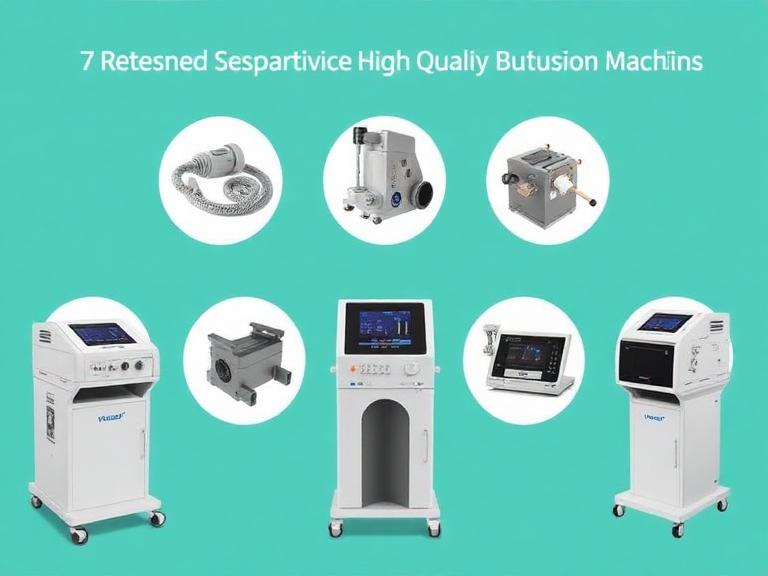
High-Quality Butt Fusion Machines are precision-engineered thermoplastic welding systems used to join HDPE, PP, and PVDF pipes by applying exact heat and hydraulic pressure. We recommend investing exclusively in hydraulic units equipped with Teflon-coated heating plates, digital high-accuracy pressure meters, and linear guide ways for flawless alignment. For commercial users, manual hand-push machines are obsolete and dangerous for anything over 160mm. If you are fabricating reducing tees or complex workshop fittings, specialized equipment like the HDPE Pipe Saddle Fusion Machine is highly recommended to ensure structural integrity and code compliance.
A butt fusion machine is a specialized industrial tool designed to weld two pieces of thermoplastic pipe or fittings end-to-end. Unlike metal welding, which uses a filler material and an arc, butt fusion is a thermofusion process. It melts the ends of the parent materials and forces them together under calculated pressure, creating a monolithic joint that is structurally stronger than the pipe itself.
High-Quality Butt Fusion Machines differentiate themselves through the rigidity of their chassis, the precision of their hydraulic cylinders, and the thermal stability of their heating elements. When you are fusing a 1200mm municipal water main, a chassis that flexes even a millimeter under pressure will cause a "high-low" misalignment, resulting in a rejected weld.
In most professional situations, the butt fusion process follows four strict, non-negotiable phases. High-quality machines are designed to execute these phases flawlessly:
Facing: The pipe ends are clamped into the machine and shaved using a rotating mechanical facer. This ensures the ends are perfectly parallel and free of oxidation.
Heating & Soaking: A Teflon-coated heating plate is inserted between the pipe ends. The pipes are pressed against the plate to form a uniform melt bead. Once the bead forms, the pressure is dropped to near zero for the "soaking" phase, allowing heat to penetrate deeply into the pipe wall.
Fusing: The heating plate is rapidly removed, and the hydraulic cylinders force the melted pipe ends together at a specific fusion pressure. Linear guide ways ensure the pipes meet perfectly concentrically.
Cooling: The joint is held under pressure until it reaches ambient temperature. From our experience, rushing the cooling phase is the primary cause of joint failure. High-end machines feature separate two-channel timers to meticulously record times in the soaking and cooling phases.
| Component | Standard Equipment | High-Quality Requirement |
|---|---|---|
| Heating Plate | Basic aluminum | Heavy-duty Teflon-coated, precise digital thermostatic control. |
| Pressure Control | Analog dial | Digital high-accurate pressure meter indicating exact readings. |
| Alignment System | Basic steel rods | Linear guide ways equipped with a heating plate and dragging plate. |
| Timers | Manual stopwatch | Integrated separate two-channel timer for soaking and cooling phases. |
Upgrading to High-Quality Butt Fusion Machines is a direct investment in risk mitigation. The primary benefit is consistency. A machine with digital pressure meters and linear guide ways eliminates operator guesswork. You achieve perfectly uniform weld beads, zero cold joints, and full compliance with international pipeline standards.
Furthermore, efficiency increases dramatically. High-end hydraulic systems retract and advance smoothly, minimizing the "open time" (the critical seconds between removing the heater and pressing the pipes together). This is crucial when working in cold or windy environments where the melt can freeze prematurely.
We must apply commercial and practical judgment: these machines are not without limitations. First, High-Quality Butt Fusion Machines require significant capital expenditure. Secondly, hydraulic and CNC machines require a robust and stable power supply—often a heavy-duty job site generator. Finally, these machines are heavy. Moving a 1600mm butt fusion machine into a muddy trench requires excavators and heavy lifting equipment.
For commercial users: Municipal contractors, industrial piping engineers, mining operators, and agricultural irrigation installers absolutely must use high-quality hydraulic butt fusion equipment. The liability of a failed joint in these sectors demands top-tier machinery.
Who does not need it: Residential plumbers doing small-scale internal water lines (under 63mm) do not need large butt fusion machines. For these applications, a Socket Fusion Welding Machine is vastly more appropriate, cost-effective, and maneuverable in tight spaces.
In our testing and field observation, operators routinely make specific errors that compromise weld integrity:
Ignoring Drag Pressure: Failing to calculate and add the drag pressure (the force required to physically move the heavy pipe across the ground) to the required fusion pressure. High-quality machines with digital pressure meters make this calculation transparent.
Contaminated Heating Plates: Touching the Teflon plate with dirty gloves or failing to clean it with isopropyl alcohol. Dirt inclusions create weak points in the weld.
Improper Pipe Preparation: Failing to use dedicated cutting tools. A jagged cut from a chainsaw forces the facer to work too hard and leads to misalignment. We strongly recommend using precision prep tools like the DJQ Series HDPE Pipe Band Saw Cutter prior to fusion.
To prioritize helping readers make a buying decision, we have categorized our top 7 recommendations based on their specific utility in the field and workshop.
For heavy-duty applications, such as municipal water and gas mains, the RHD Butt Welding Machine is the industry standard. Capable of handling pipes from 63mm up to an astonishing 1600mm, this hydraulic powerhouse guarantees the clamping force necessary to overcome massive drag friction on large-diameter pipes.
Field machines are great for straight runs, but fabricating segmented bends, elbows, and tees requires specialized geometry. The RHJ Multi-Angle Fitting Elbow Welding Machine is engineered specifically for workshop environments, allowing precise angular adjustments to create custom fittings that meet exact engineering schematics.
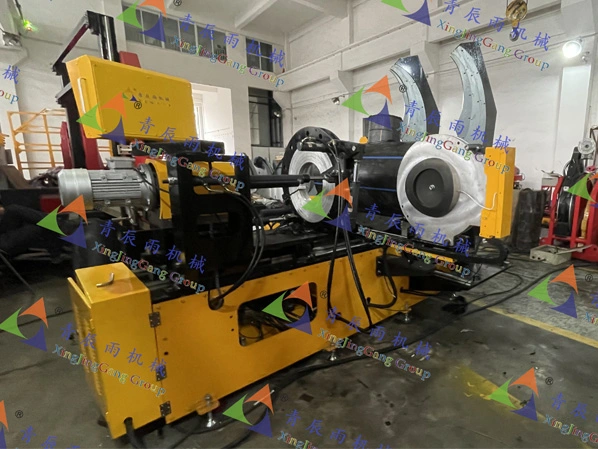
For municipal gas lines where data logging is a legal requirement, CNC (Computer Numerical Control) butt fusion machines remove human error entirely. The machine automatically calculates heat, soak, and cooling times based on the pipe's SDR (Standard Dimension Ratio) and material data.
A fusion machine is only as good as the pipe preparation. To fabricate complex branch saddles, you must prepare the pipe with the exact curvature. The HDPE Pipe Radius Cutter is a mandatory companion machine for high-quality workshop fabrication, ensuring flush contact before the heating plate is applied.
For day-to-day contracting (160mm to 315mm), a mid-range hydraulic machine with a compact carriage is essential. These machines are designed to be lowered directly into narrow trenches, featuring quick-disconnect hydraulic lines and lifting points for excavators.
In high-volume fabrication workshops, offcuts and facing ribbons generate massive amounts of plastic waste. Progressive commercial users pair their butt fusion operations with a Plastic Recycling Machine to regrind HDPE waste, turning a disposal cost into a sustainable revenue stream.
| Machine Type | Pros | Cons |
|---|---|---|
| Hydraulic Fusion Machines | Precise pressure control; capable of welding large diameters; eliminates operator fatigue; required for commercial certification. | Higher initial purchase cost; requires electrical power for the hydraulic pump; heavier to transport. |
| Manual Hand-Push Machines | Low cost; lightweight and highly portable; requires minimal power (only for the heating plate and facer). | Relies on operator physical strength for pressure; highly inconsistent welds; extremely dangerous/unsuitable for pipes over 160mm. |
| Feature | Manual Machines | Hydraulic Machines | CNC Automated Machines |
|---|---|---|---|
| Best Use Case | Small residential / low pressure | Standard commercial / municipal | Critical gas lines / data logged jobs |
| Pressure Control | Human strength (Inaccurate) | Hydraulic gauge (Accurate) | Computer controlled (Perfect) |
| Data Logging | None | Optional add-on | Fully Integrated |
| Investment Level | Low | Medium | High |
When evaluating High-Quality Butt Fusion Machines, do not let price be your sole determining factor. Consider the following:
Carriage Rigidity: Inspect the thickness of the steel on the main clamps. Thin clamps will warp under high hydraulic pressure, causing the pipe to slip.
Cylinder Quality: Hydraulic leaks in the middle of a weld will ruin the joint. Ensure the machine uses premium hydraulic seals and features a digital high-accurate pressure meter.
Insert Availability: You will need reducing inserts for various pipe sizes. Ensure the manufacturer provides precision-machined aluminum inserts rather than cheap cast alternatives.
From our experience, if you are a commercial contractor, buying a manual butt fusion machine is a false economy. The labor costs associated with a single failed joint will instantly eclipse the money saved on the equipment. We recommend investing exclusively in hydraulic units with linear guide ways and separate two-channel timers. For workshops, integrating specialized equipment like the Saddle Fusion Machine and the RHJ Multi-Angle welder will dramatically increase your fabrication throughput and profitability.
While all phases are important, the cooling phase is the most critical for structural integrity. Removing the pipe from the machine before the core of the pipe wall has fully cooled will introduce internal stresses that lead to premature failure. Always adhere to the machine's two-channel timer.
Teflon (PTFE) provides a non-stick surface. If you use a bare metal plate, the molten HDPE will stick to the metal when the plate is removed, tearing the melt bead and ruining the fusion surface. The Teflon coating ensures a clean release.
No. Butt fusion only works when joining similar thermoplastic materials with similar melt flow indexes (MFI). Attempting to fuse HDPE to Polypropylene will result in a weak, incompatible bond that will easily snap.
To ensure your pipeline construction meets international safety and quality standards, we highly recommend consulting the following resources:


 English
 العربية
 русский
 Español
 français
 português
 Deutsch
 italiano
 Türkçe
 한국어
한국어 日本語
日本語