In the modern pipe manufacturing industry, relying on continuous inkjet (CIJ) printers is an outdated, expensive, and messy habit. From our experience on factory floors, the cost of ink consumables, solvent makeup, and the inevitable printhead clogging destroys profit margins. For commercial users operating high-speed extrusion lines, the transition to laser marking is no longer optional; it is a critical requirement for maintaining traceability and minimizing downtime.
However, selecting the right machine is complex. The market is saturated with varying wavelengths, wattages, and optical configurations. You cannot simply buy a generic laser and expect it to mark high-density polyethylene (HDPE) or PVC cleanly. In this guide, we evaluate the top industrial laser printers, explain the underlying technology, and outline exactly how to integrate these systems into your factory floor.
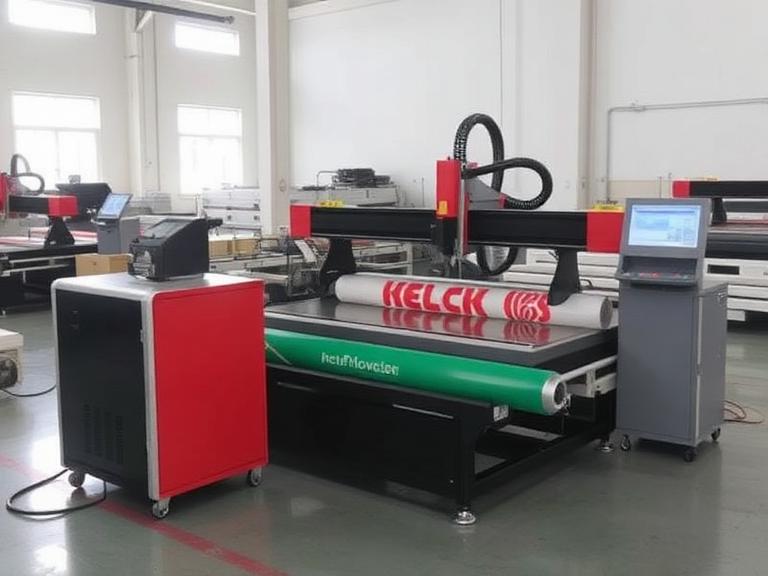
In most professional situations, the best PVC pipe laser printing machine is a 20W to 30W Fiber Laser or a specialized UV Laser, depending on the pipe color and line speed. Our top overall recommendation is the Xjgmachine YC20XX Plastic Pipe Laser Printer. It utilizes advanced USA fiber technology, offering a 100,000-hour lifespan with zero consumables. For high-speed lines, fiber lasers provide deep, permanent etching on PVC, while UV lasers are better suited for high-contrast "cold marking" on thin-walled or sensitive plastics. Upgrading to a laser system typically yields a return on investment (ROI) within 12 to 18 months through the total elimination of ink and solvent costs.
A PVC pipe laser printing machine is an industrial coding system designed to etch or mark alphanumeric characters, barcodes, and logos directly onto the curved surface of extruded plastic pipes. Unlike inkjet systems that deposit liquid ink onto the surface, a Plastic Pipe Laser Printer utilizes a focused beam of light to alter the physical surface of the pipe. This creates an indelible mark that cannot be rubbed off by friction, weather, or chemical exposure during installation.
Laser printers for pipes operate primarily through three mechanisms: ablation, foaming, or color change. Fiber lasers (typically 1064nm wavelength) usually rely on localized melting and foaming, creating a raised, highly visible mark on dark plastics. UV lasers (355nm wavelength) utilize a photochemical reaction that breaks the molecular bonds of the PVC without generating excessive heat, known as "cold marking."
The laser beam is steered by a high-speed galvanometer (galvo) scanner—a set of motorized mirrors that move incredibly fast to trace the text onto the pipe as it moves down the Plastic Pipe Production Line. A rotary encoder attached to the line communicates the exact speed of the pipe to the laser's software, ensuring the text is printed cleanly without stretching or compressing, even if the line speed fluctuates.
A factor that many plant managers overlook is the mechanical integration of the laser system. Because galvo scanners operate at microscopic tolerances, the physical mounting of the laser head must be absolutely rigid. When assembling the mounting brackets and vibration-dampening feet for the printer stand, maintenance teams must choose the correct pitch for coarse and fine threads.
If you fail to choose the correct pitch for coarse and fine threads on your mounting hardware, the micro-vibrations originating from the Plastic Extruder will cause the fasteners to slowly loosen over time. This leads to focal drift, resulting in blurry or distorted serial numbers. From our experience in heavy-duty applications, engineers who know how to choose the correct pitch for coarse and fine threads—using fine threads for high-vibration isolation mounts and coarse threads for general structural framing—experience significantly less downtime. Always ensure your mechanical setup is flawless before calibrating the laser optics.
Zero Consumables: You will never buy another bottle of MEK solvent or inkjet fluid. This eliminates hazardous chemical storage and handling.
Permanent Traceability: The mark is physically etched into the pipe. It will survive burial in harsh soils, UV exposure, and abrasive handling.
Minimal Maintenance: Fiber lasers have no moving parts in the laser source. There are no pumps to rebuild, no filters to change, and no nozzles to unclog.
High Speed: Modern fiber and UV lasers can easily keep up with line speeds exceeding 100 meters per minute.
The primary limitation is the initial capital expenditure. A commercial laser system requires a significantly higher upfront investment compared to a budget inkjet printer. Additionally, laser marking generates microscopic fumes and plastic dust (especially when marking PVC). Therefore, you must invest in a heavy-duty fume extraction system to protect your workers and prevent the laser lens from becoming coated in residue.
For commercial users: If you run continuous extrusion lines producing PVC, PE, or corrugated pipes, upgrading to laser is essential. The return on investment is undeniable when you factor in the elimination of consumable costs and reduced downtime.
Who does not need it: For beginners or small-scale hobbyists extruding tiny batches of custom profiles, the cost of a laser system is prohibitive. Stick to manual stamping or basic inkjet systems until your production volume justifies the capital expense. Similarly, if your factory only runs a Plastic Recycling Machine to produce raw pellets, you do not need end-product printing equipment.
In our testing, the most common mistake is buying a CO2 laser for HDPE pipes. CO2 lasers (10.6 µm) are excellent for organic materials like wood or paper, but they often just melt plastic without providing high contrast. You need a Fiber or UV laser for high-contrast plastic marking.
Another frequent error is failing to synchronize the encoder. If the laser assumes the pipe is moving at 20 m/min, but it is actually moving at 22 m/min, the print will stretch and become illegible. Always ensure strict mechanical contact between the encoder wheel and the pipe.
For commercial pipe extrusion, Xjgmachine sets the standard. This unit is specifically engineered to handle the harsh, dusty environments of pipe manufacturing facilities.
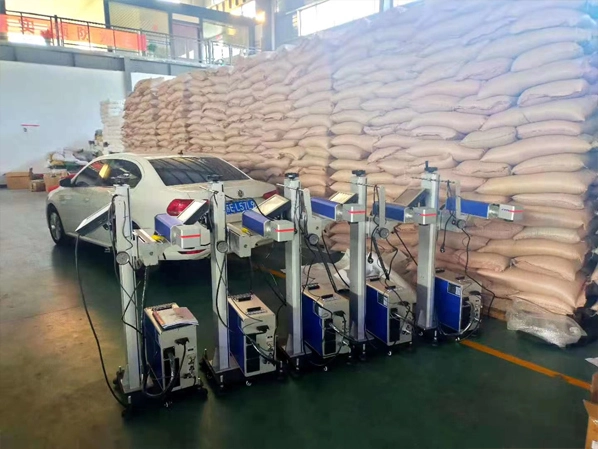
This Fiber Laser Marking Machine adopts internationally advanced technology. The laser source utilizes USA technology with a lifetime reaching up to 100,000 hours—meaning 8-10 years of operation without any consumables or intensive maintenance. It is the premier choice for marking logos, codes, and serial numbers directly onto extrusion lines. It is widely used across the building, plumbing, and oil & gas sectors due to its high-speed printing capabilities and exceptionally low maintenance profile.
View Full SpecificationsThe Keyence MD-X is a hybrid laser marker that combines the high peak power of a YVO4 laser with the long service life of a fiber laser. It features an incredibly advanced 3-axis auto-focus system, meaning it can perfectly track the curvature of a pipe without distorting the text at the edges. It is a premium, high-cost option for facilities that require absolute perfection in 2D barcode scanning.
Videojet is a household name in coding, and the 7340 is their heavy-duty fiber option. Its standout feature is the incredibly compact marking head (claimed to be the smallest in the industry). If your production floor is crowded with downstream equipment like a Plastic Crusher or a Plastic Pulverizer Machine, fitting a bulky laser head onto the line can be difficult. The 7340 solves this spatial constraint effortlessly.
Domino’s F230i fiber laser is built for uncompromising speed. If you are running small-diameter pipes or PEX tubing at blistering speeds, this machine delivers sharp, high-contrast marks without breaking a sweat. It features a robust IP65 rating, making it entirely impervious to the dust and water spray commonly found near the cooling tanks of an extrusion line.
While we generally recommend fiber lasers for plastics, the Linx CSL30 is a highly optimized CO2 laser that utilizes a specific wavelength (9.3 µm) that reacts much better with PVC than standard 10.6 µm CO2 lasers. It is an excellent middle-ground option if you need to mark a wide variety of materials, including packaging films, alongside your pipe production.
This is a Green Laser system (532nm). Green lasers operate at a "cold" spectrum compared to fiber lasers, making them exceptional for marking highly sensitive, thin-walled plastics where you cannot risk melting or weakening the pipe wall. If you manufacture specialized medical tubing or thin-wall irrigation pipes, the Telesis EV4GDS prevents structural compromise.
A reliable workhorse designed for maximum uptime. The SmartLase F250 features intuitive software that allows operators to change codes and print jobs in seconds. It integrates seamlessly with central factory ERP systems, ensuring that batch numbers and time-stamps update automatically without operator intervention.
| Laser Type | Wavelength | Best Material | Contrast Level |
|---|---|---|---|
| Fiber Laser | 1064 nm | HDPE, PVC, Metals | Very High (White mark on dark plastic) |
| UV Laser | 355 nm | PE, PVC, Thin-wall plastics | Excellent (Cold marking, no damage) |
| CO2 Laser (Standard) | 10.6 µm | Wood, Paper, Glass | Low (Melts plastic, hard to read) |
| CO2 Laser (Specialized) | 9.3 µm | PET, Specific PVC | Medium to High |
| Technology | Pros | Cons |
|---|---|---|
| Laser Printers | Zero consumables, permanent mark, extremely low maintenance, highly legible, eco-friendly. | High initial capital cost, requires fume extraction, safety shielding mandatory. |
| Inkjet Printers | Low initial purchase price, easy to move between lines, prints in various colors. | High ongoing ink/solvent costs, frequent nozzle clogging, messy environment, marks can rub off. |
| Specification | What to Look For | Why It Matters |
|---|---|---|
| Wattage | 20W, 30W, or 50W | Higher wattage allows for deeper engraving at faster line speeds. 20W is the minimum for industrial extrusion. |
| IP Rating | IP54 or IP65 | Extrusion plants are dusty (PVC dust) and wet (cooling tanks). A high IP rating protects the delicate optics. |
| Marking Field | Lens dependent (e.g., 110x110mm) | Dictates how large of a logo or how long of a text string you can print in one pass before the pipe moves out of range. |
| Encoder Integration | Hardware I/O ports | Vital for synchronizing the laser firing sequence with the physical speed of the moving pipe. |
Before issuing a purchase order, evaluate your exact line speed and material composition. Do not buy a 50W fiber laser if your line only moves at 10 meters per minute; a 20W system will suffice and save you thousands of dollars. Conversely, if you are producing high-speed Plastic Straw Making Machine products or rapid HDPE tubing, undersizing your wattage will result in faint, unreadable text.
Always request a sample mark. Send a 1-meter section of your exact pipe material to the manufacturer and have them laser it at your specified line speed. Inspect the sample for clarity, contrast, and tactile depth. If you are manufacturing large infrastructural products like a Plastic Floater/HDPE Pipe Floater, ensure the laser head can be positioned safely above the massive diameter of the product.
We recommend entirely phasing out inkjet systems for any rigid extrusion line. The hidden costs of solvents and daily printhead cleanings destroy operational efficiency. For commercial users, the Xjgmachine YC20XX Fiber Laser represents the optimal balance of price, durability, and technological superiority. Its 100,000-hour diode life guarantees a decade of uninterrupted marking. Ensure you pair it with a robust industrial fume extractor to capture the toxic off-gassing produced when lasering PVC.
Switching to a PVC pipe laser printing machine is a highly profitable commercial decision for extrusion facilities. By choosing a high-quality fiber or UV laser, you eliminate recurring consumable costs, drastically reduce maintenance downtime, and provide your customers with permanent, high-contrast product traceability. Pay close attention to mechanical mounting—remembering to choose the correct pitch for coarse and fine threads on all hardware—and ensure your laser's wattage matches your required line speed.
Yes, they are safe for the structural integrity of the pipe, provided the laser is properly calibrated to etch only the top micro-layer of the surface. However, lasering PVC releases hydrochloric acid gas and hazardous fumes. You absolutely must use a high-quality industrial fume extractor with chemical and HEPA filters.
No. Fiber lasers cannot deposit colored ink. The mark is created by reacting with the pipe's pigment. On black HDPE, a fiber laser creates a high-contrast white/gray mark. On white PVC, it typically creates a dark gray/black mark through localized carbonization.
High-end industrial fiber and UV lasers can effortlessly mark moving pipes at line speeds exceeding 120 meters per minute (approx. 400 feet per minute). The exact speed limit depends on the complexity of the text, the wattage of the laser, and the size of the marking field.
OSHA (Occupational Safety and Health Administration): Guidelines regarding laser safety in industrial environments and the requirement for proper fume extraction when processing plastics. Review OSHA Laser Guidelines
ASTM International: Standards for plastic pipe identification and marking requirements (e.g., ASTM D2122) ensuring that laser depth does not compromise pipe pressure ratings. Review ASTM Standards
FDA (Center for Devices and Radiological Health): Federal performance standards for light-emitting products, including Class 4 industrial laser systems used in manufacturing. Review FDA Laser Regulations


 English
 العربية
 русский
 Español
 français
 português
 Deutsch
 italiano
 Türkçe
 한국어
한국어 日本語
日本語