English
 العربية
 русский
 Español
 français
 português
 Deutsch
 italiano
 Türkçe
 한국어
한국어 日本語
日本語
In the competitive manufacturing landscape, running an inefficient production line is the fastest way to erode your profit margins. Many plant managers assume that output inconsistencies and high scrap rates are just part of the plastics business. From our experience, this is a dangerous misconception. If you are struggling with dimensional instability, poor surface finish, or slow line speeds, the root cause almost always traces back to a fundamental misunderstanding of the polymer extrusion process and the machinery driving it.
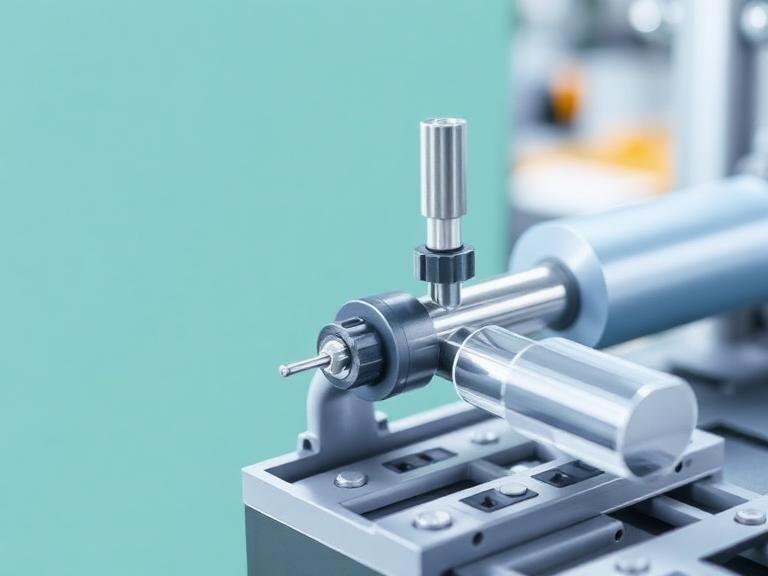
This guide is not a theoretical overview; it is a practical blueprint. We are going to dissect polymer extrusion, analyze when a standard machine is sufficient, and identify exactly when you must upgrade your hardware to remain competitive. Whether you are extruding standard PVC pipes or specialized polyamide thermal break strips, understanding the thermodynamics and mechanics of your extrusion line is non-negotiable for commercial success.
Quick Answer: What is Polymer Extrusion?
A plastic extruder is a device that uses molten plastic to push through a die and produce a continuous profile to produce a variety of plastic items. Extrusion is a prominent production technique in the plastics sector since it is both extremely effective and economical. The plastic is heated and melted, then mixed, shaped, cooled, and cut into the desired shape as part of the plastic extrusion process. Construction, agricultural, automotive, and packaging are just a few of the industries that employ plastic extruder machines due to their adaptability.
What It Is and How It Works
At its core, polymer extrusion is a thermodynamic and mechanical process of transforming solid plastic pellets or rubber into a continuous, uniform geometric shape. Unlike injection molding, which creates discrete 3D objects inside a closed mold, extrusion is a continuous high-volume operation.
How it works: Raw thermoplastic material (resin) is gravity-fed from a top-mounted hopper into the extruder's barrel. Inside the barrel, a precisely machined screw rotates, pushing the polymer forward. As the resin travels down the barrel, it is subjected to intense friction (shear heat) generated by the rotating screw, supplemented by external heater bands. This combination of heat and pressure melts the polymer into a highly viscous fluid.
At the end of the barrel, the molten polymer is forced through a screen pack to remove contaminants, and then through a custom-machined steel die. The die acts as a template, dictating the final shape of the continuous profile—be it a flat sheet, a hollow pipe, or a complex window seal. Once the hot plastic exits the die, it enters downstream equipment where it is rapidly cooled (usually via a vacuum water bath) to lock in its dimensions before being pulled and cut to length.
| Process Stage | Mechanism | Critical Quality Control Factor |
|---|---|---|
| Feeding | Gravity or gravimetric feeding from hopper to barrel. | Consistent material flow; avoiding bridging in the hopper. |
| Melting & Mixing | Shear friction from the screw and external barrel heaters. | Precise temperature zone control to prevent polymer degradation. |
| Pumping & Die Forming | Screw pressure forces melt through the tooling die. | Managing die swell and ensuring uniform melt pressure. |
| Cooling & Sizing | Vacuum calibrators and chilled water baths. | Cooling rate optimization to prevent warping or internal stress. |
Commercial Benefits of Polymer Extrusion
For commercial users, the primary appeal of polymer extrusion is unprecedented throughput and unit cost reduction. Once an extrusion line is stabilized, it can run 24 hours a day, 7 days a week, producing miles of product with minimal operator intervention. This continuous operation drastically lowers the labor cost per foot of material.
Furthermore, modern extrusion equipment offers immense adaptability. By simply swapping out the tooling die and adjusting the downstream calibration, a single production line can pivot from manufacturing simple PVC tubing to complex multi-lumen medical catheters. In our testing, operations that upgrade to modern, optimized screw geometries experience up to a 30% increase in output with a simultaneous reduction in energy consumption per kilogram of processed material.
Limitations: What Extrusion Cannot Do
Despite its efficiency, we must be honest about its physical constraints. Polymer extrusion is strictly limited to 2D continuous profiles. If you need a part with closed ends, complex intersecting geometries, or varying wall thicknesses along its length (like a gear or a computer mouse casing), extrusion is the wrong technology. You need injection molding.
Additionally, achieving dimensional accuracy in extrusion is notoriously difficult compared to enclosed molding. Because the plastic exits the die in a molten state, it is subject to "die swell" (the natural expansion of polymer chains once freed from pressure) and gravity. Mastering the drawdown ratio and downstream vacuum sizing requires highly skilled technicians and exact tooling.
Who Should Use It vs. Who Does Not Need It
Who should use it: Industrial manufacturers producing construction materials, automotive weather stripping, medical tubing, wiring insulation, and packaging films. If your product is sold by the meter or requires a continuous cross-section, extrusion is mandatory. For example, producing energy-efficient windows relies entirely on dedicated equipment like a PA66 GF25 Polyamide Profile Thermal Break Strip Extrusion Line to create the insulating barriers within aluminum frames.
Who does not need it: For beginners or small-scale prototyping labs focused on discrete, highly detailed components, investing hundreds of thousands of dollars into a continuous extrusion line is a massive misallocation of capital. Stick to 3D printing or low-volume injection molding.
| Criteria | Polymer Extrusion | Injection Molding |
|---|---|---|
| Output Type | Continuous 2D profiles (pipes, sheets, films) | Discrete 3D parts (gears, casings, caps) |
| Production Speed | Extremely high (continuous linear feet/minute) | Moderate (dependent on cycle time per part) |
| Tooling Cost | Generally lower (machined dies) | Very high (complex steel/aluminum molds) |
| Dimensional Control | Relies heavily on downstream vacuum/cooling | Highly precise, controlled by the rigid mold cavity |
Common Mistakes in the Extrusion Process
In most professional situations, the most expensive mistakes happen before the machine is even turned on. The most prevalent error is ignoring resin preparation. Materials like PET, nylon, and certain polyamides are highly hygroscopic; they absorb moisture from the air. If you run wet resin through an extruder, the water turns to steam, causing bubbles, structural weakness, and a ruined surface finish. Failing to utilize a proper desiccant dryer is an amateur mistake that costs commercial facilities thousands of dollars in scrap.
Another major mistake is mismatching the screw design to the polymer. Running temperature-sensitive PVC on an aggressive screw designed for polyethylene will cause the PVC to degrade, burn, and release corrosive hydrochloric acid gas. You must match your hardware to your material.
| Machine Type | Pros | Cons |
|---|---|---|
| Single-Screw Extruder | Lower upfront capital cost; excellent for pumping and melting virgin standard resins; easier to operate and maintain. | Poor mixing capability; lower shear control; cannot effectively process heavily compounded or temperature-sensitive powders. |
| Twin-Screw Extruder | Superior distributive and dispersive mixing; self-wiping capability; precise shear and temperature control; ideal for PVC powder and compounding. | Significantly higher capital investment; complex maintenance; requires highly trained operators to manage intersecting screw dynamics. |
Buying Considerations for Extrusion Lines
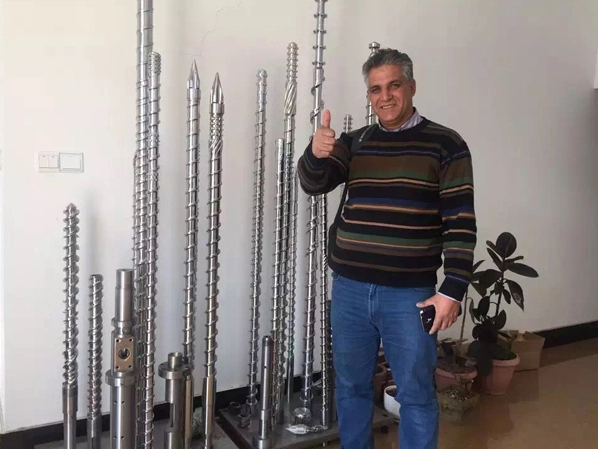
When you are ready to invest, buying an extruder on price alone is a recipe for disaster. You are not buying a machine; you are buying an output rate and a dimensional tolerance. If your application demands simple, high-speed melting of PE or PP pellets, a standard SJ Single Screw Extruder provides exceptional ROI. However, if you are processing rigid PVC powder for window profiles, a single screw will fail. You must invest in a SJSZ Conical Twin Screw Extruder to ensure proper gelation and prevent material degradation.
For heavy-duty applications involving elastomeric materials, standard plastic extruders lack the necessary torque and feeding mechanisms. You must specify a dedicated Rubber Extrusion Line designed to handle the high viscosity and curing requirements of synthetic rubbers.
| Your Application Goal | Recommended Machinery Focus | Expert Consideration |
|---|---|---|
| High-volume standard pipes & tubing (PE/PP) | High L/D Ratio Single-Screw Extruder | Ensure the gearbox can handle continuous high-torque loads to maximize linear output speed. |
| Complex PVC profiles or Masterbatch Compounding | Conical or Parallel Twin-Screw Extruder | Verify the machine has adequate vacuum venting zones to remove volatiles during the intensive mixing phase. |
| Automotive weather seals and gaskets | EPDM Rubber Seal Strip/Profile Extrusion Line | Look for integrated downstream microwave or hot air vulcanization (curing) tunnels specific to EPDM. |
| Insulating glass components | PE/PP/PVC Warm Edge Spacer Bar Extrusion Line | Precision downstream vacuum calibration is critical to ensure the spacer fits flawlessly into the glass assembly. |
Expert Recommendation and Next Steps
We recommend a brutal audit of your current production output. If your defect rate exceeds 3% due to melt instability, or if your line speed is bottlenecked by poor downstream cooling, you are losing money to obsolete equipment. Stop applying temporary fixes to worn-out barrels and screws. Upgrade to a modern line tailored specifically to your resin profile.
Xjgmachine is a leading plastic extruder company in China. As one of the most professional plastic extrusion equipment manufacturers and suppliers, we have rich experience in providing different types of plastic extrusion equipment for a variety of sizes, applications and materials, including SJ single screw extrusion machine and SJSZ twin screw extrusion machine. If you need plastic extrusion equipment and are looking for reliable plastic extrusion machinery manufacturers to work with, please feel free to contact us!
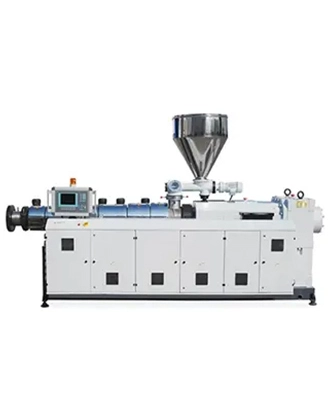
For operations looking to scale, aligning with an OEM that offers end-to-end solutions—from the hopper to the final cutting saw—eliminates integration headaches. Are you processing standard pellets, or are you pushing the boundaries with aggressive compounds? Choose the machinery that matches your ambition.
Frequently Asked Questions (FAQ)
References
To further support our engineering insights, we consult the following authoritative industry standards and organizations:
Plastics Industry Association - For comprehensive standards on plastics manufacturing and safety protocols.
ASTM International - For standardized testing methods regarding polymer melt flow indices and material specifications.
Society of Plastics Engineers (SPE) - Providing advanced research, technical journals, and troubleshooting methodologies for extrusion professionals.